

Your free seed saving video and guide: start your own home seed bank
Every tomato you eat has next summer’s garden sitting inside it. Here’s how to get those seeds out, dried and stored so they’ll actually grow.
There’s a tomato we’ve been growing for years now, saved from a punnet somebody handed us over a fence, and we’ve never known what it’s properly called. Best one in the patch, every summer. It’s been quietly adapting to this valley, this soil and these late frosts for a decade, which is exactly what saving your own seed does for you. And you can start this summer, with one ripe tomato and a jar.
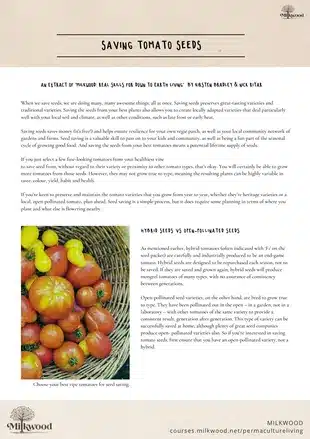
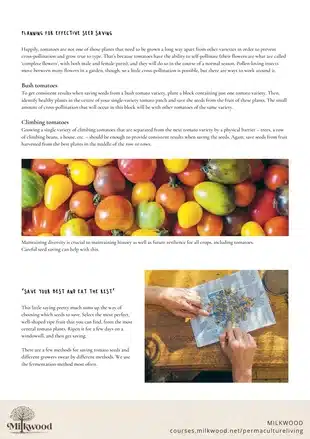
So we’ve made you a free video on the seed saving basics, and pulled the seed-saving pages out of the Tomato chapter of our book as a guide you can keep. Because tomatoes need more care than most seeds do, and they’re where nearly everyone starts… have a peek inside 👀


We’ll send the video and the ‘Saving Tomato Seeds’ guide straight to your inbox, for keeps.
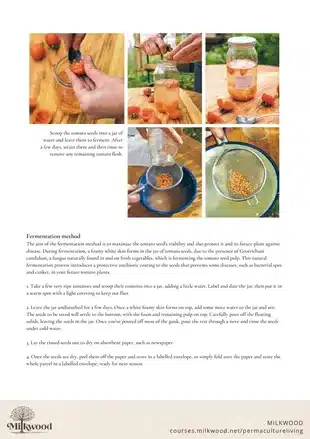
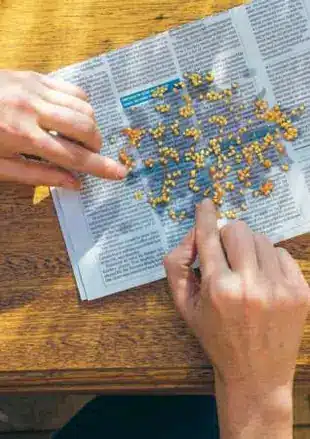
Pop your details in below and we’ll email you both. A 14-minute video on the basics, and the 4-page PDF on tomatoes – the fermentation method, the newspaper method, and how to store what you’ve saved so it’s still alive next spring.
You’ll also get our Milkwood newsletter every so often… tips, seasonal notes and good resources, from our valley to your inbox.
One thing to know – you’ll need to click the confirm link in our first email before the guide arrives, so do check your inbox.
We never share your details, there’s no spam ever, and you can unsubscribe anytime with one click.

What’s inside the guide
Between the video and the guide, you’ll get the bits that trip most of us up the first time:
- Why hybrid seed won’t come true next year, and how to spot it on the packet.
- How to keep your varieties from crossing, so this year’s favourite tomato is next year’s too.
- Save your best and eat the rest. Which fruit to keep back for seed, and why the healthiest plant is the one to watch.
- The fermentation method, in a jar on the kitchen bench over a few days. It’s the one most growers swear by.
- The newspaper method, for when you want it done in five minutes.
- The compost seedbank trick – bury your best tomatoes in a bucket of compost and let spring sort it out.
- How to label and store your seed so it’s still alive when you come back for it.
And seed saving is free, which is the lovely part of it. One summer’s tomatoes will give you far more seed than you could ever plant… so most of it ends up going over fences and into seed swaps, the way it always has.

Who’s this from?
We’re Kirsten and Nick, and we’ve been at this since 2007 – farming first, then teaching thousands of people to grow food, ferment, keep bees and cultivate mushrooms. We’ve been saving seed the whole time. The jars in our cupboard hold varieties that came from other people’s gardens, other people’s grandmothers, and a couple we’ve simply lost the names of.
And the real gift of it is that the seed slowly becomes yours – a bit tougher, a bit better suited to your frosts and your soil and your rainfall, season after season. Because that’s how every heirloom in the world got started, one person’s garden at a time.
So grab the video and the guide, and save a few seeds this summer… and if you get stuck along the way, just hit reply on any of our emails – helping folks learn new skills is what we do.
