
So – you want to grow mushrooms at home. But which mushrooms grow on logs or straw, and why?
Can you feed them anything? How do you know what will grow? How do you make sure it’s the mushrooms you wanted… not something else entirely? Why is it all so confusing?
All fair enough questions, that we get all the time – and until you know, it’s all pretty unfamiliar. So let’s sort some mysteries out.
The good news is that most mushrooms you’ll want to grow at home like to eat very specific things… logs, sawdust, or straw.
Some mushrooms love logs best. Others love straw. Or compost. And a few – like the bad-ass oyster mushrooms – can flex and eat just about any of the above, and still give you a dependable harvest.
So when you’re planning your home mushroom setup, you can either start from:
- “I want to grow this mushroom” – and then find out what it likes to eat, and source that material;
- or from “I have a lot of this material” – and find which mushrooms would love to eat that.
If you’re growing mushrooms for household or community resilience (and we recommend you should), look around to see what organic materials are easy to source locally… and decide what mushrooms to grow from there.
Right. Now. Which fungi eat who, or what, and why… and what this means for you as a home grower – let’s get down to it.
Which Mushrooms Grow on Logs or Straw (and Why They Love It)
Different fungi eat all sorts of organic matter and things, depending on who they are and where they live.
There are four main types of fungi that produce mushrooms (setting aside yeasts and moulds), though the lines between them are fuzzy. Many fungi shift between roles as they grow… connecting, decomposing, healing, or rebuilding, depending on what niche they can fill.
We find it helps to group fungi by their ecological role – even though these lines blur in the real world.
We’ll mention a few types below, then focus on the ones you can grow at home (which are all the same type yay!).
Mycorrhizal Fungi
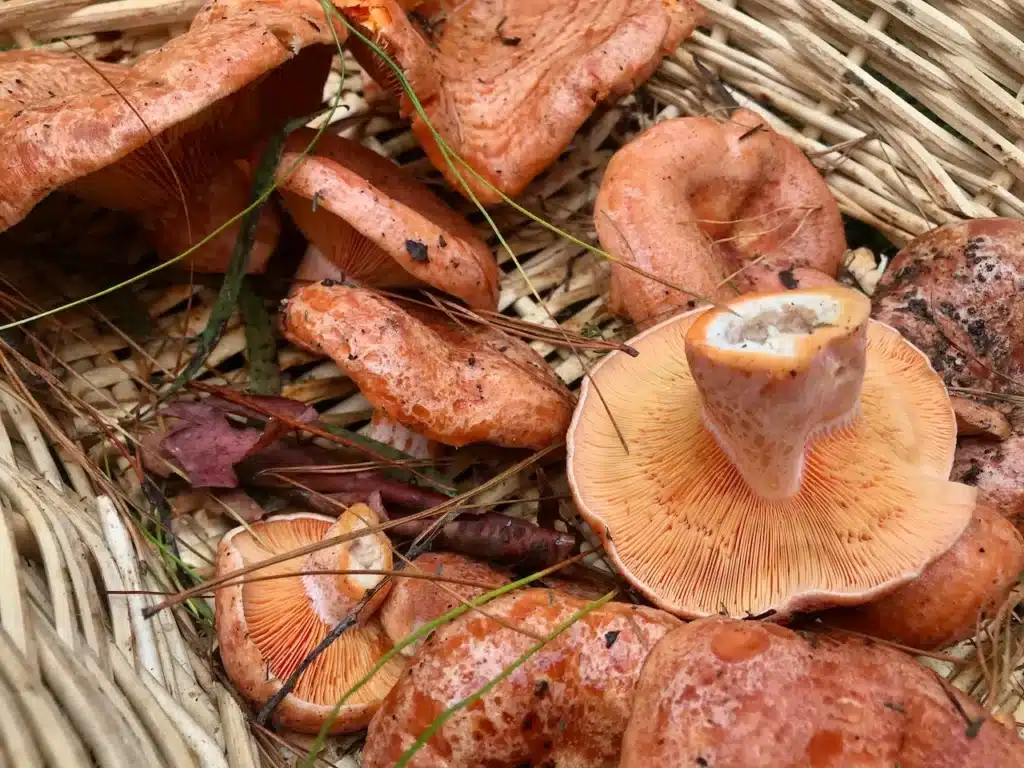
One fascinating group are the mycorrhizal fungi – from myco (mushroom) and rhizal (roots). These fungi form deep, symbiotic partnerships with plants, exchanging sugars for minerals, water, and resilience.
Nearly all plants, from grasses to old-growth forest giants, have mycorrhizal allies beneath their roots. Their underground networks can stretch 10 to 100 times farther than the roots themselves, gathering nutrients and moisture from far away.
Plants with these fungal partners grow stronger, resist disease more easily, and connect more deeply to the living soil. The fungi, in turn, are fed by the plant’s sugars – an ancient trade that benefits everyone.
Saffron milkcaps (Lactarius deliciosus), porcini (Boletus edulis), chanterelles (Cantharellus cibarius), matsutake (Tricholoma matsutake), slippery jack (Suillus luteus), birch bolete (Leccinum scabrum) and truffles (Tuber spp.) are all mycorrhizal.
That’s why we can’t easily cultivate them at home … they live woven into forest roots, part of a much larger web.
Endophytic Fungi
Then there are the endophytes – fungi that live within plants rather than around their roots. They help defend their hosts against insects and disease, and some even encourage better growth and seed production. It’s a quiet, unseen partnership, but a powerful one all the same.
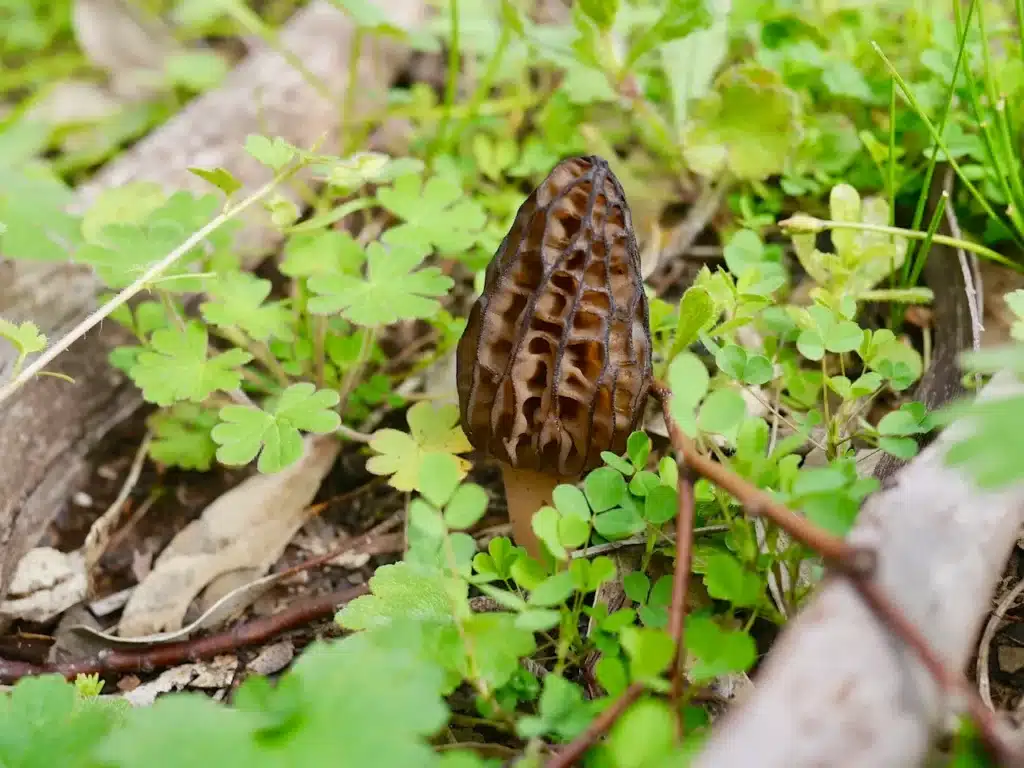
Very few endophytes produce actual mushrooms -although there’s evidence that morels (Morchella spp.) and turkey tail (Trametes versicolor) sometimes act this way.
Saprotrophic Fungi – the Recyclers
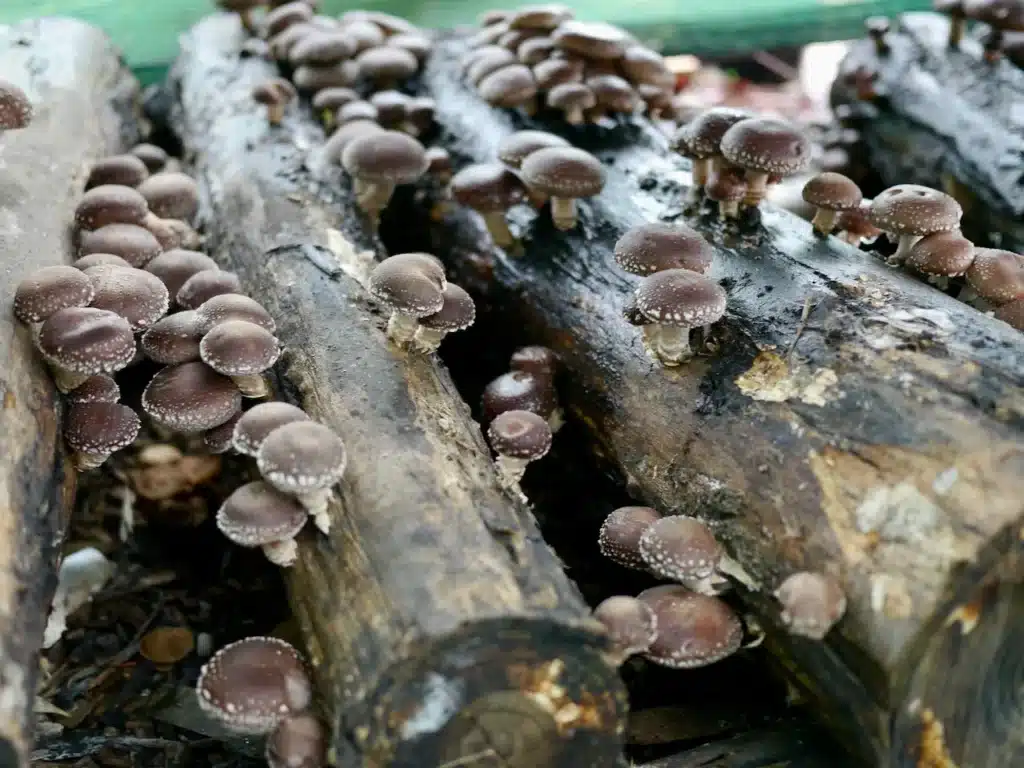
And finally, the “easy” ones to grow (yay)… the saprotrophic fungi, recyclers of the world. Huzzah! These are most of the mushrooms we generally grow and eat – the ones that turn dead wood, straw, and leaves into living soil.
Without these hard-working team players, the Earth would be buried under fallen trees and leaves that never break down. Instead, they quietly transform all that was once alive into nourishment for what comes next – keeping the great cycle of life turning, one decomposing log at a time.
The vast majority of cultivated mushrooms are saprotrophic fungi (sometimes called saprobes).
They’re the demigods of decay – and the rest of this article is mostly about them.
Early, Mid and Late-Stage Decomposers
Different species of saprotrophic fungi work in succession – each wave picking up where the last left off. So we can think of them as early, mid, and late-stage decomposers.
Early-Stage Decomposers
First come the fast movers – fungi that leap onto fallen twigs, grass blades, insects, or logs and get straight to work. We used to call them “primary decomposers.”
They’re the first species to colonise new organic matter, weaving their mycelial threads through wood or leaf litter to begin the long, alchemical process of turning it back into soil. Most of our favourite edible and medicinal mushrooms belong here, including:
Pearl oysters, phoenix oysters, king oysters, shiitake, lion’s mane, reishi, turkey tail, enoki, nameko, pioppino, shimeji, wood ear, and the garden giant (wine cap).
Most of what we teach involves these wonderful species.
Mid-Stage Decomposers
Then come the team players… fungi that collaborate with bacteria, worms and other soil life to continue breaking things down. The humble white button mushroom (Agaricus bisporus), shaggy mane (Coprinus comatus) and common ink cap (Coprinopsis atramentaria) are classic examples.
These species, especially the button mushrooms, are a favourite for commercial farms, where conditions can be perfectly controlled. But these mushrooms are much trickier to grow at home, where your compost moisture and airflow is going to vary, without a bunch of tech to keep all those conditions exactly right.
That’s why most home growers stick to the easier, more chilled-out early-stagers… on logs, sawdust or straw.
Late-Stage Decomposers
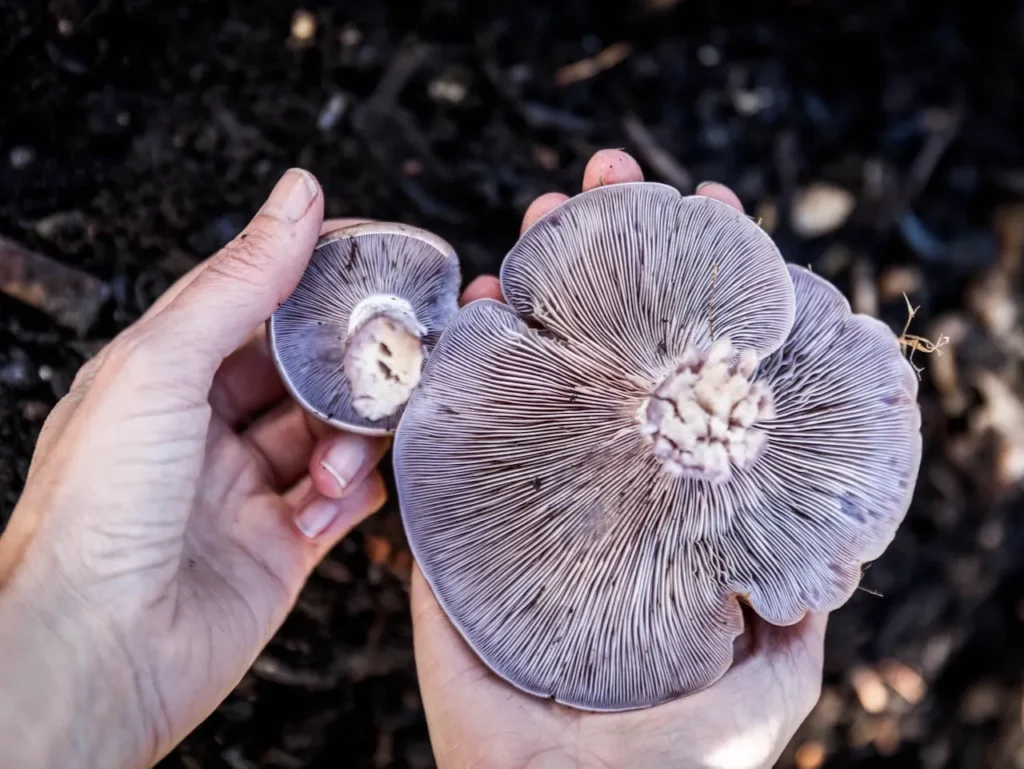
Finally, the late-stage decomposers take their turn – fungi like field mushrooms (Agaricus campestris), wood blewitts (Lepista nuda) and parasol mushrooms (Macrolepiota procera).
They work at the tail end of the cycle, transforming the last of the material into rich, living soil. You can go ahead and inoculate patches of them in your garden, and they’ll definitely help your soil thrive… though the harvests can be a bit hit and miss.
Ok – that’s the short version. What does this mean for you, at home, with your bucket of straw, or logs, or whatever you’ve gotten your hands on to get growing mushrooms with?
Fungi That Love to Grow on Freshly-Cut Logs
These species are all early-stage decomposers, but they specialise in breaking down tough, lignin-rich wood – material that very few other organisms can eat.
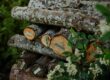
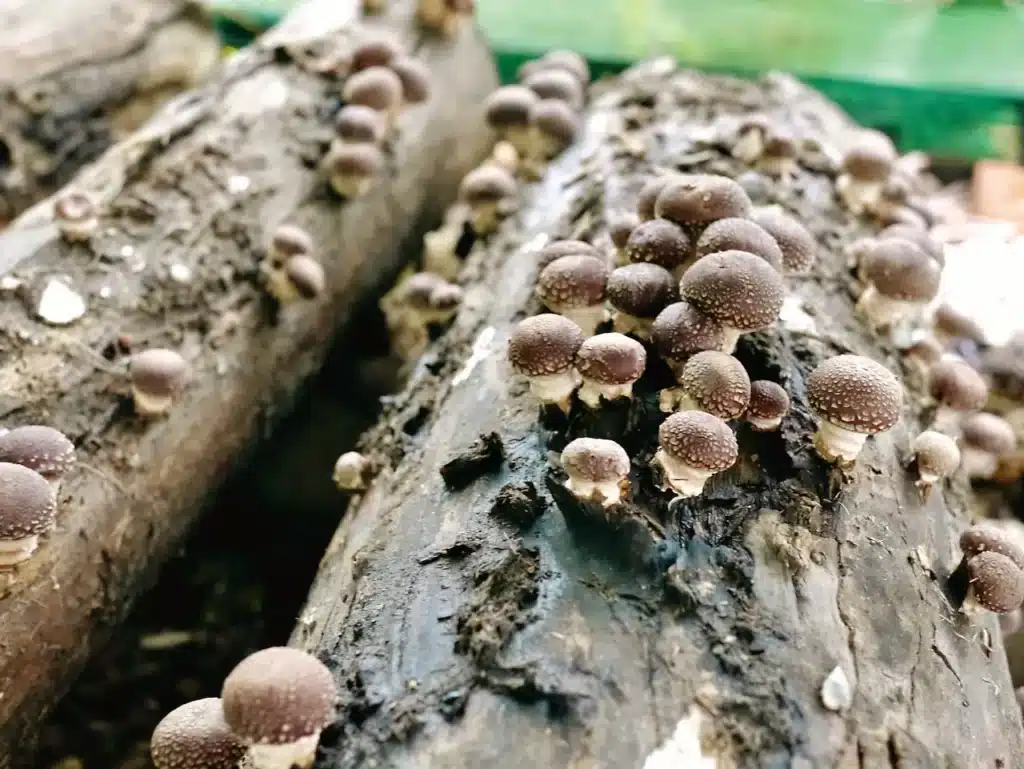
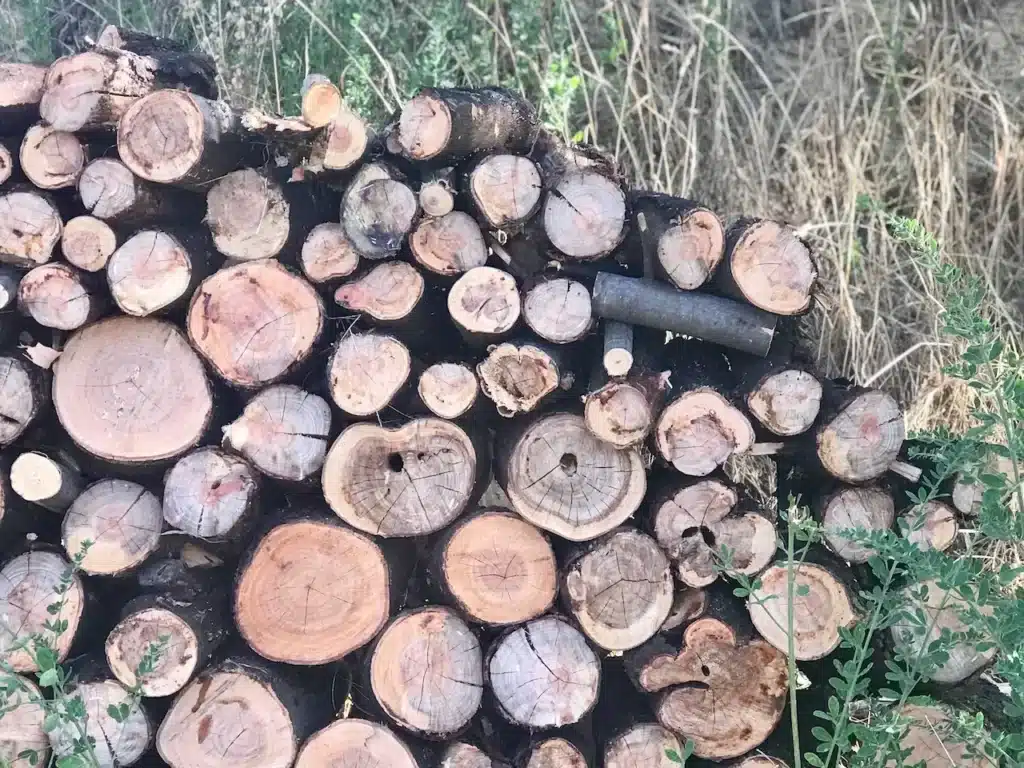
They love straight-up wood, freshly cut, and get growing in the layer just under the bark, in the sapwood, straight away.
Log-loving mushrooms include:
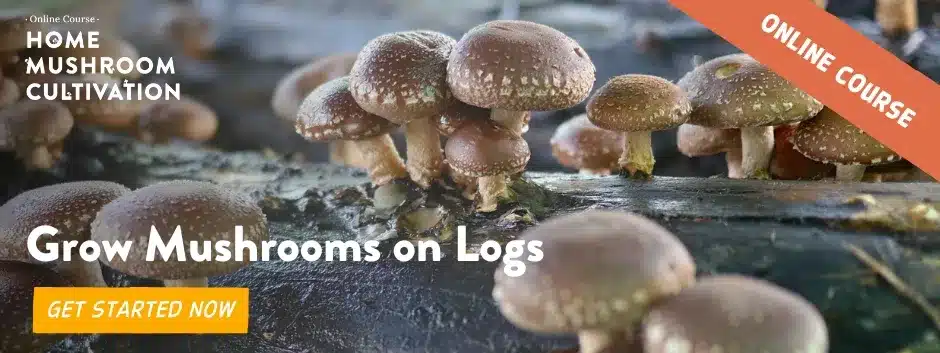
- Shiitake
- Enokitake
- Turkey tail
- Pioppino
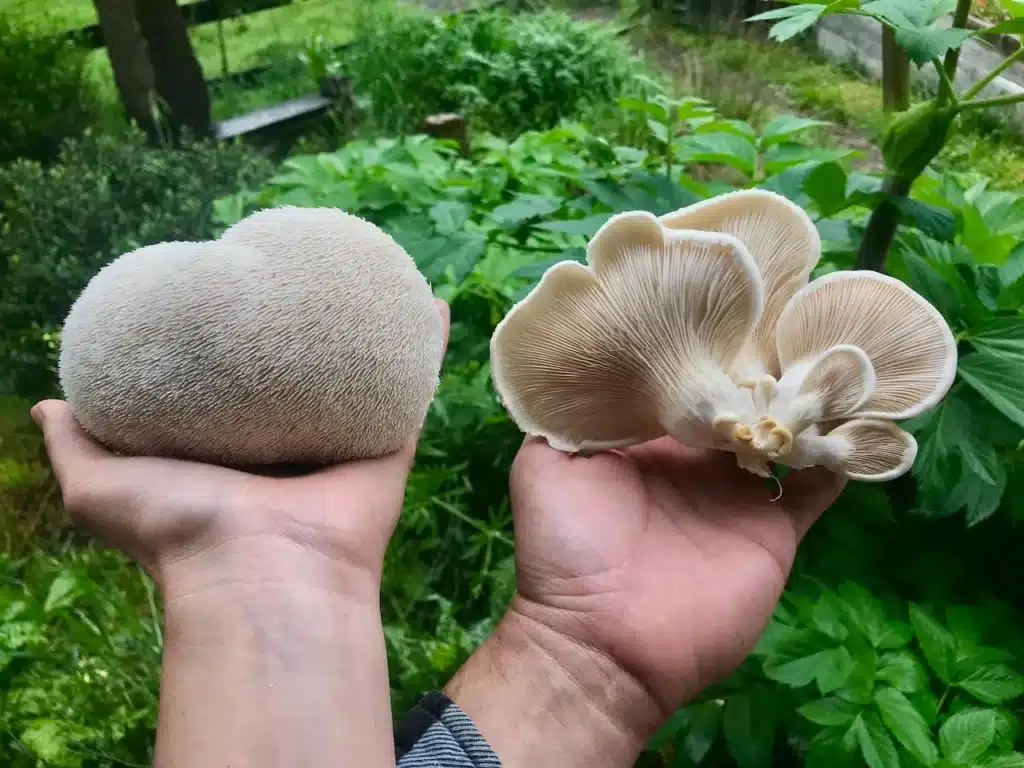
- Lion’s mane
Log cultivation resources:
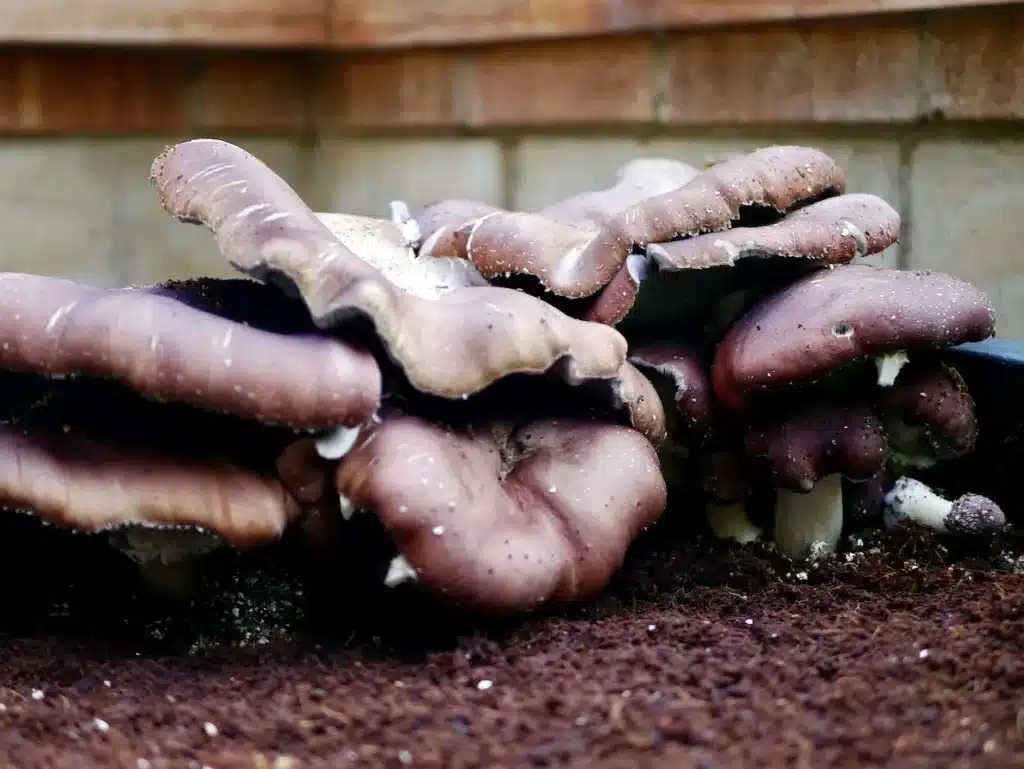
Fungi That Love to Grow in Mushroom Gardens
These species are either true late-stage decomposers – tackling complex organic material where earlier fungi left off – or sometimes they’re early-stage, fresh leaf litter decomposers… that thrive where fresh organic matter meets living soil, on the forest floor (or out the back of your place).
Best species for garden beds include:
- Wood blewitts
- Agaricus species
- King Stropharia (Wine cap)
They’ll grow well in mushroom garden beds if they have plenty of the right food and you inoculate at the right time of year.
They’re also the easiest to replicate with DIY stem-butt / cardboard spawn cultures.
Mushroom Garden Resources:
- How To: Grow Edible Mushrooms In Your Home Garden
- DIY Mushroom Cardboard Spawn: an Easy Mushroom Cloning Technique
- Milkwood Mushroom Growing Directory
Oyster Mushrooms – The Ultimate All-Rounders
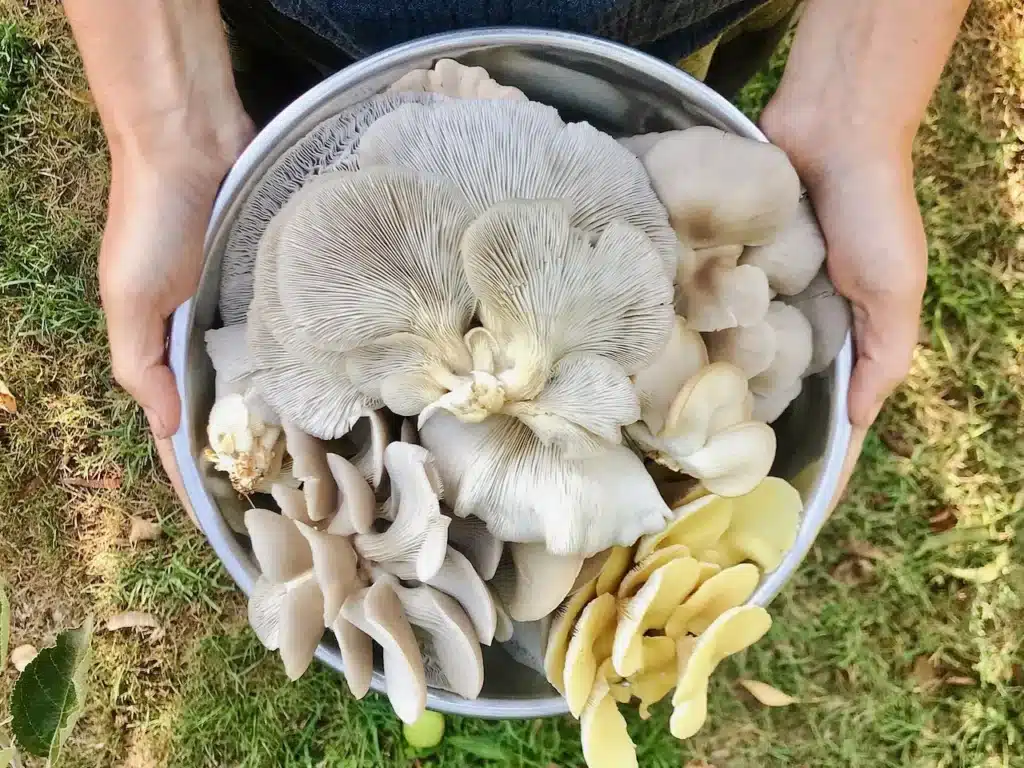
Oyster mushrooms (Pleurotus species) are the bad-ass fungi you definitely want in your home cultivation setup.
With just a bit of help, their mycelium grows fast – outcompeting most other fungi and producing a harvest before mould or bacteria can get a foothold.
They’ll fruit on logs, straw, and everything in between – even fresh lawn clippings! Different oyster species have different preferences, but overall they grow the fastest, always.
That’s why they’re the best mushrooms for beginners: quick yields, visible progress, and lots of learning along the way.
Oyster Growing Resources:
- Eat Your Lawn! Growing Oyster Mushrooms on Fresh Grass Clippings
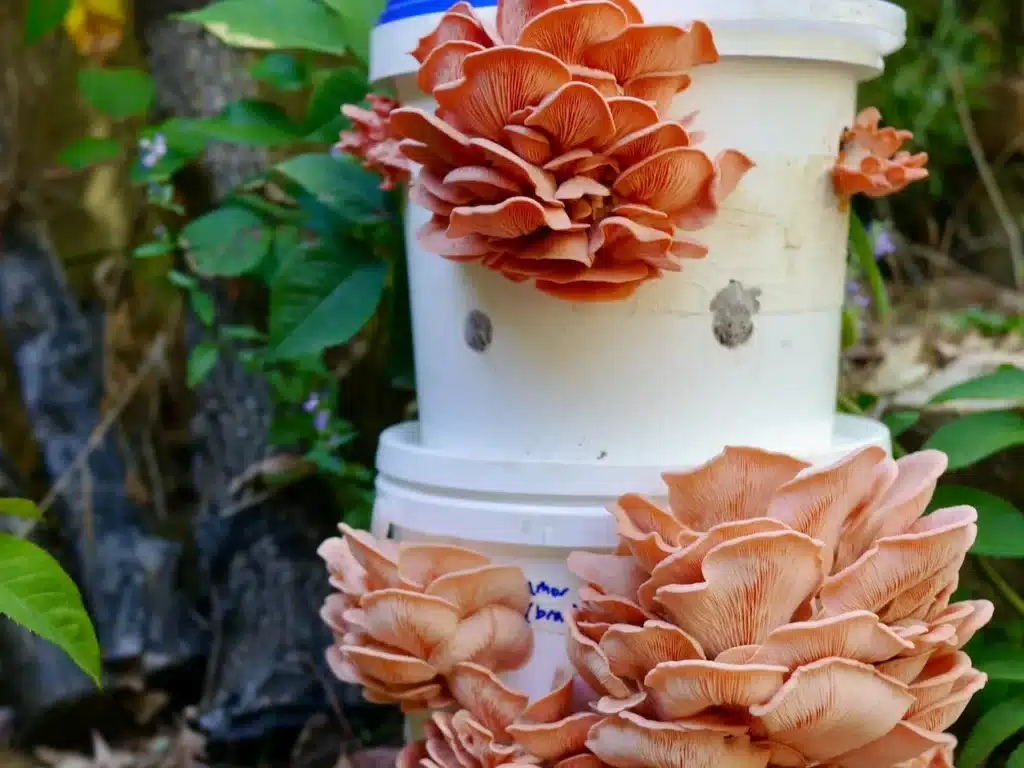
- Growing Mushrooms in Buckets – A Home Guide
- Grow Mushrooms – in Bamboo! Options for low-waste Mushroom Cultivation
A Few Notes on Lignin (Wood) vs Cellulose (Straw)
Scientists and growers sort the early-stage decomposing mushrooms by how well they break down the plant fibres known as lignocellulose – the mix of lignin, cellulose and hemicellulose that makes up wood and straw.
Most of these fungi are what we call white-rot fungi – capable of digesting all three components – but each fungi species definitely have their favourite foods.
Lignin-rich specialists – like shiitake, reishi, turkey tail and lion’s mane – prefer dense hardwood logs or sawdust. Lignin is tough stuff: it’s the plant’s armour, a natural barrier that blocks out competition. But these fungi have the enzyme keys to unlock it, breaking through the wood’s defences to reach the tasty cellulose and hemicellulose inside.
Cellulose-rich generalists – like oyster mushrooms -skip the heavy lifting and go straight for speed. They thrive on lighter, low-lignin materials such as straw or agricultural waste, where there’s little to slow them down. Their strategy: grow fast, fruit early, outcompete everything else.
These preferences mirror the individual species enzyme toolkits: lignin-eaters pump out more laccases and peroxidases, while cellulose-lovers make more cellulases and hemicellulases.
So on dense, high-lignin logs, a shiitake plays the long game… slow colonisation (six to eighteen months), but once established, it fruits for years with very little fuss.
On lighter, low-lignin mixes like straw or boosted sawdust, it’s a sprint instead. Oysters win by running fast and clean – which is why we only need to pasteurise those substrates rather than sterilising them.
In short: shiitake logs need patience and steady care | oyster buckets just need a quick, tidy start.
Get the match right between species and substrate, and you’ll cut contamination risk, increase yield, and keep your fungi very, very happy.
What About Jars, Bags and Buckets?
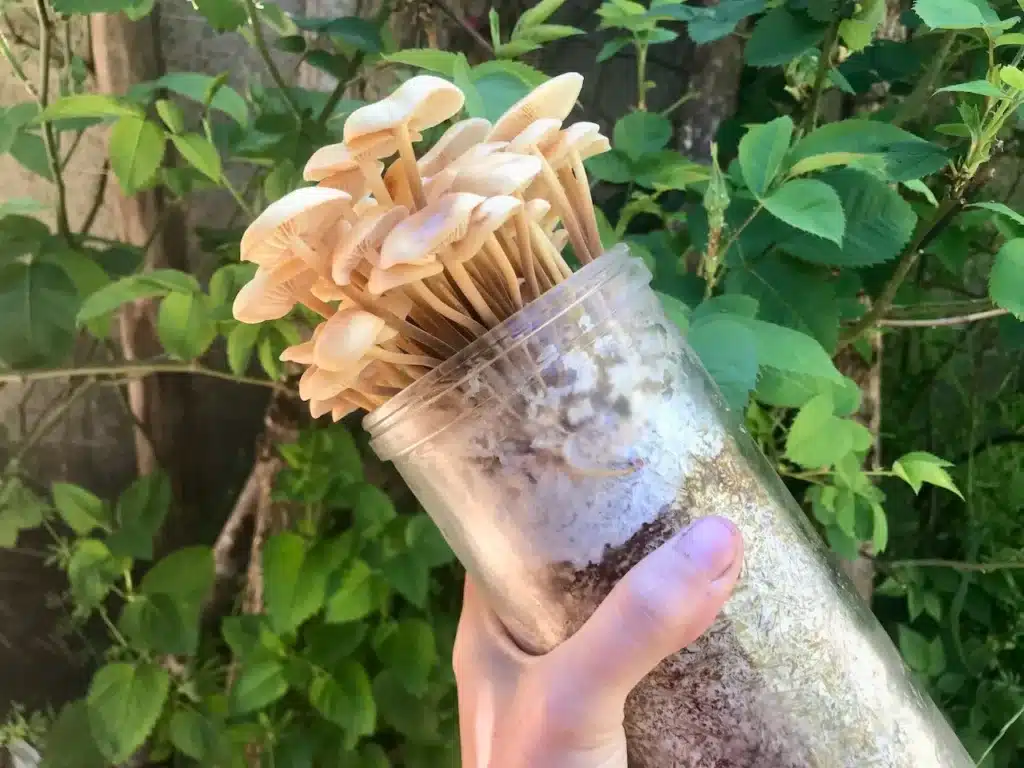
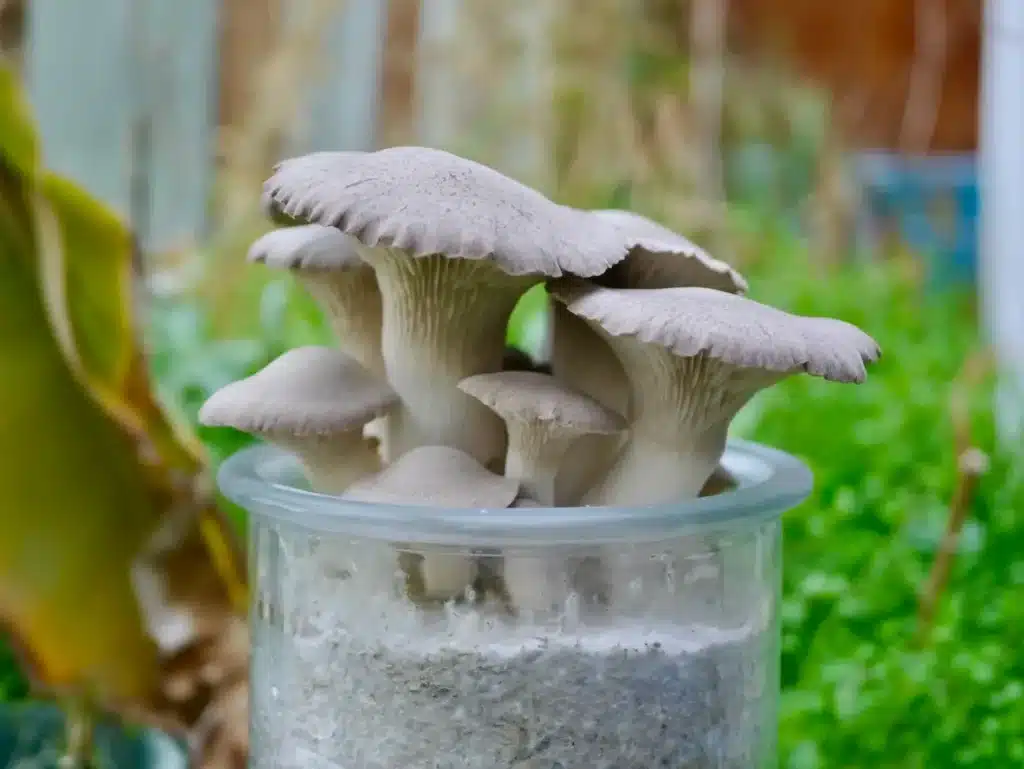
Good question. These are all great growing techniques. We really do recommend you use what you have, where you are, to grow edible and medicinal mushrooms. If that’s logs, then go to. If what you have is buckets or bottles, no worries, let’s get growing.
These techniques are used mostly for early-stage decomposers – because you can fill them with simple ingredients like straw or sawdust.
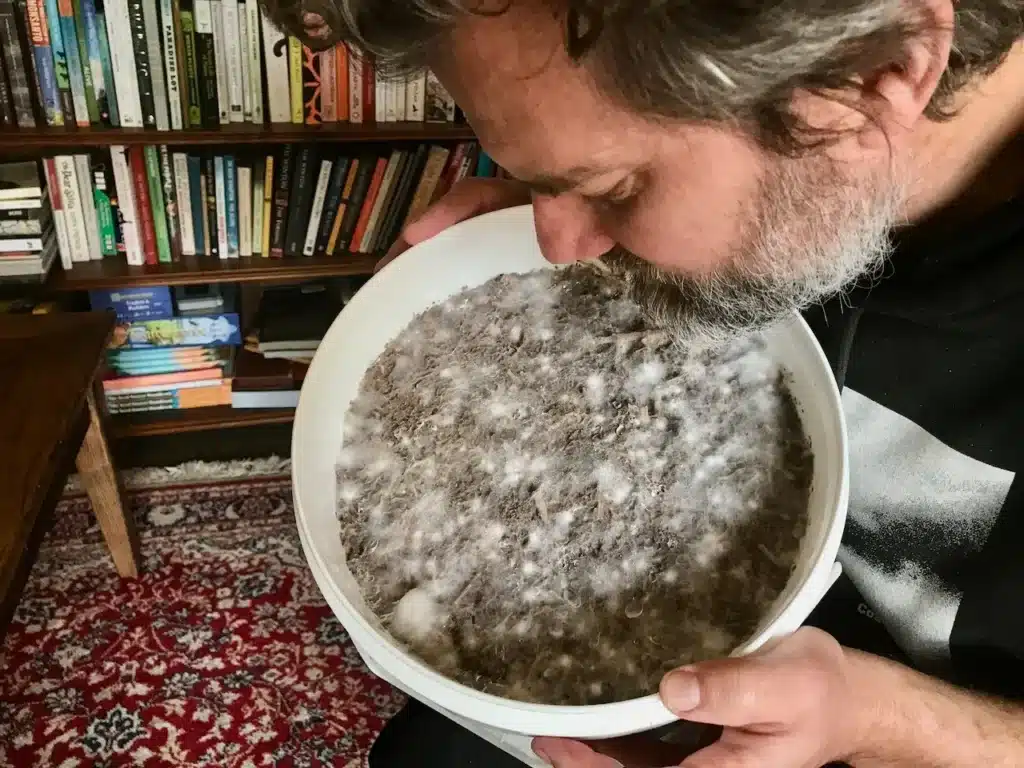
Short version: your bucket is a log.
Think of these DIY growing environments as your best attempt to mimic a freshly-fallen log in the pristine forest, but using the materials that are easily on hand.
A contained, clean space. But it’s a bucket (instead of an actual log) filled with the right organic material for that mushroom species.
So – if a mushroom grows well on a certain kind of log, then it will also grow well in a bucket of clean sawdust of that same tree type. Same food, different environment – and because the sawdust is already “munched,” the mycelium grows faster, so you’ll harvest sooner.
Might I Accidentally Grow Poisonous Mushrooms?
We get this question a lot. The short answer is: no.
Only a few of the tens of thousands of mushrooms species are deadly poisonous… and most of those are not saprotrophic. Death caps (Amanita phalloides), for example, are mycorrhizal fungi – they only grow through complex relationships with specific trees and soil life. You cannot accidentally grow one in a bucket or on a log.
If you follow basic cultivation techniques, your buckets of straw will fruit the mushrooms you inoculated them with.
Yes, you might grow a bit of mould occasionally – that’s part of the learning curve. And, as with anything you’re growing – anything looks or smells off, don’t eat it. But you won’t accidentally grow a random poisonous lookalike species of mushroom in your bucket of oysters, or on your shiitake logs.
In Summary
- Mycorrhizal and endophytic fungi are forest partners… fascinating, but not easily home-grown.
- Saprotrophic fungi are your backyard allies – they recycle organic matter into mushrooms and soil.
- Early-stage decomposers like oysters, shiitake, and lion’s mane are the easiest and most productive for beginners.
- Match your species to your available materials, using our guides above, and you’ll reduce waste, grow food, and strengthen your local ecosystem.
Here’s our Beginner’s Guide to Mushroom Cultivation, which is a handy PDF that gives an overview of all the above techniques and how to get growing.
Ready to Grow Mushrooms at Home?
If you’d love to grow your own oyster, shiitake, or lion’s mane mushrooms – using sustainable materials and proven low-tech methods – our Home Mushroom Cultivation course is a great way to get growing with confidence.
It’s a self-paced, hands-on course, where we mentor you through the whole process of setting up a Home Mushroom Cultivation setup (however big or small this might be for you) – with all the carefully crafted lessons, guides, calculators, supply sources, community and personal mentorship you’ll need. It’s pretty great.
And the next class opens very soon! Here’s all the details.
Learn which mushrooms grow best on logs, straw, or sawdust, and how to transform waste into food, medicine, and soil health. Small steps, big resilience – one flush at a time. 🍄