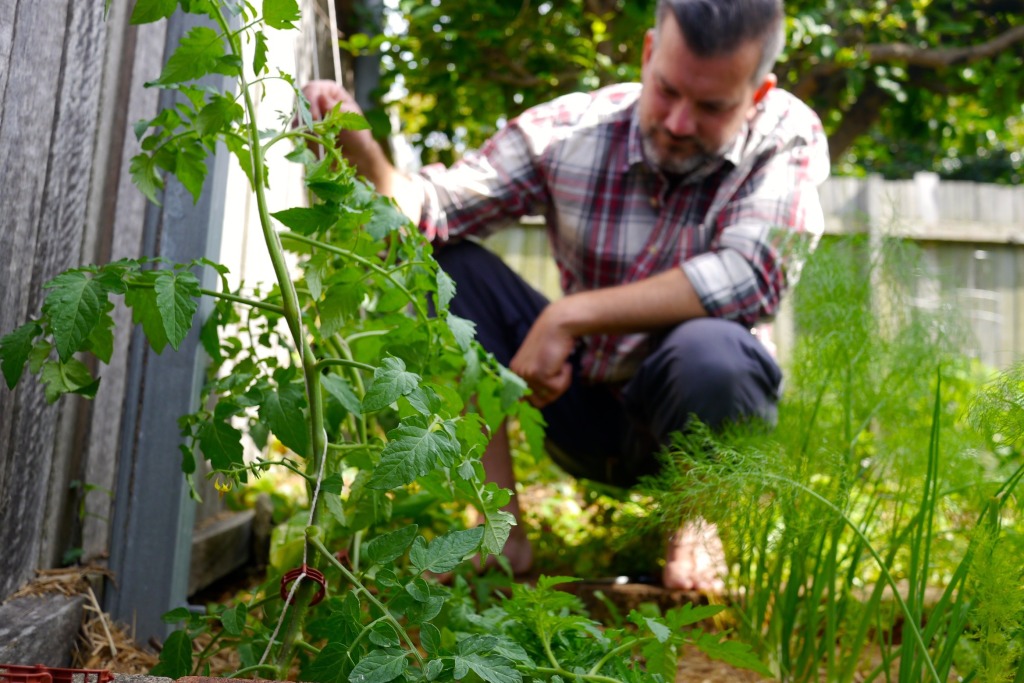

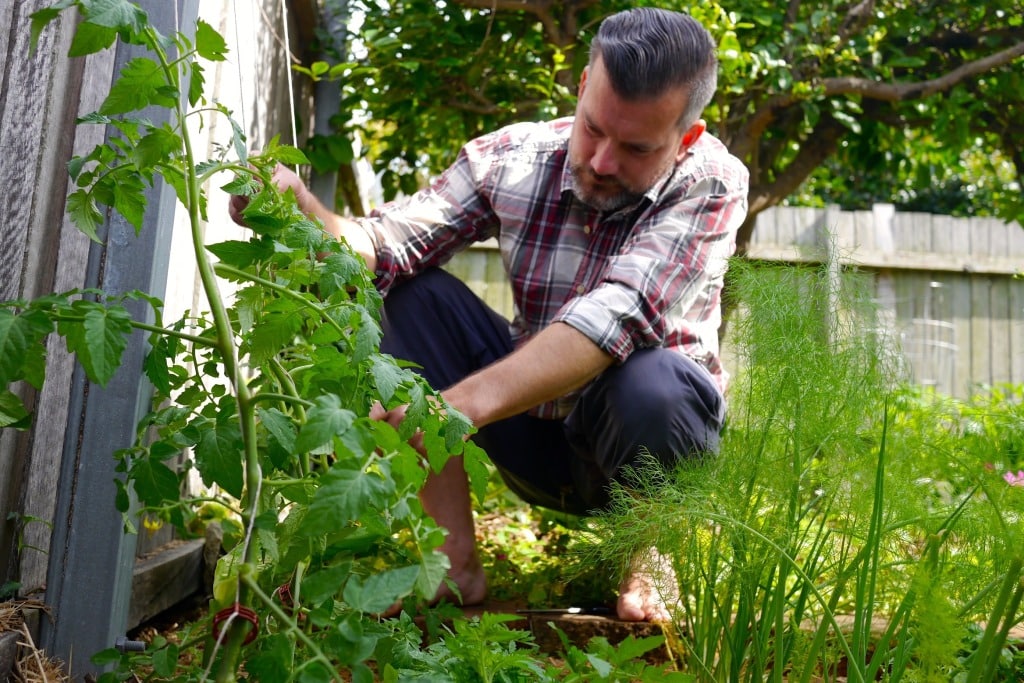
String em up, baby! Climbing tomatoes often need a helping hand to reach their full potential. Here’s our two favourite methods for stringing up best ever backyard toms.
Farm or patio, tomatoes are the go. I can’t imagine summer without them.
In a small backyard like the one we’re living in just now, climbing tomatoes make lots of sense – it’s a chance to make the most of the vertical space along our back fence for growing as much food as we can fit in.
There’s a gazillion ways you can help tomatoes to climb – I grew up with the tomato stake method.
But these days, following a few years of growing in serious quantities, we’ve borrowed a few market gardening tomato tricks for climbers, to apply to our back fence.
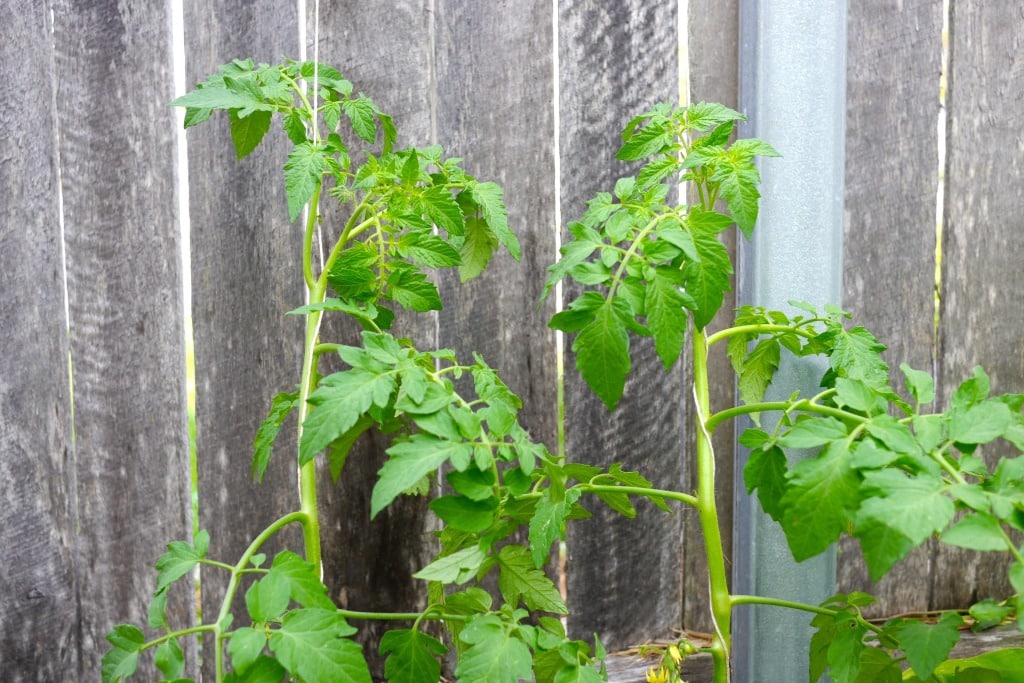
Method 1: good ol’ String
Who would have thought. String! But seriously, string is a great option for climbers. It’s gentle on the tomato stems, cheap, available, and easy to use to increase your harvest.
But there’s a trick to it too. Follow this method and you’ll be one happy tomato eater.
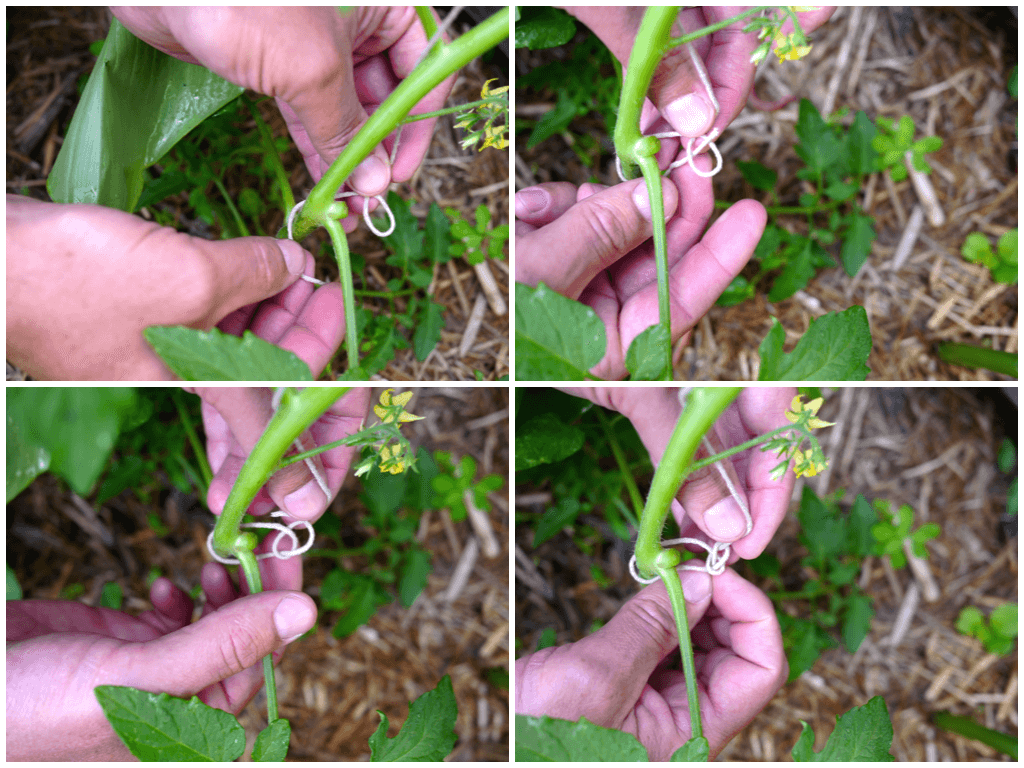
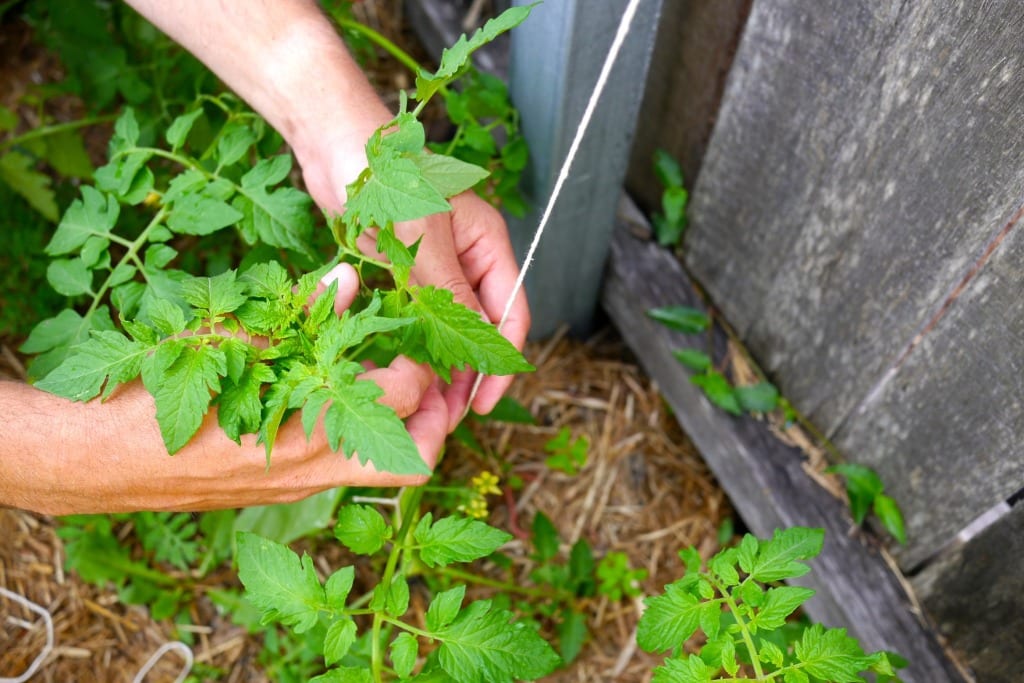
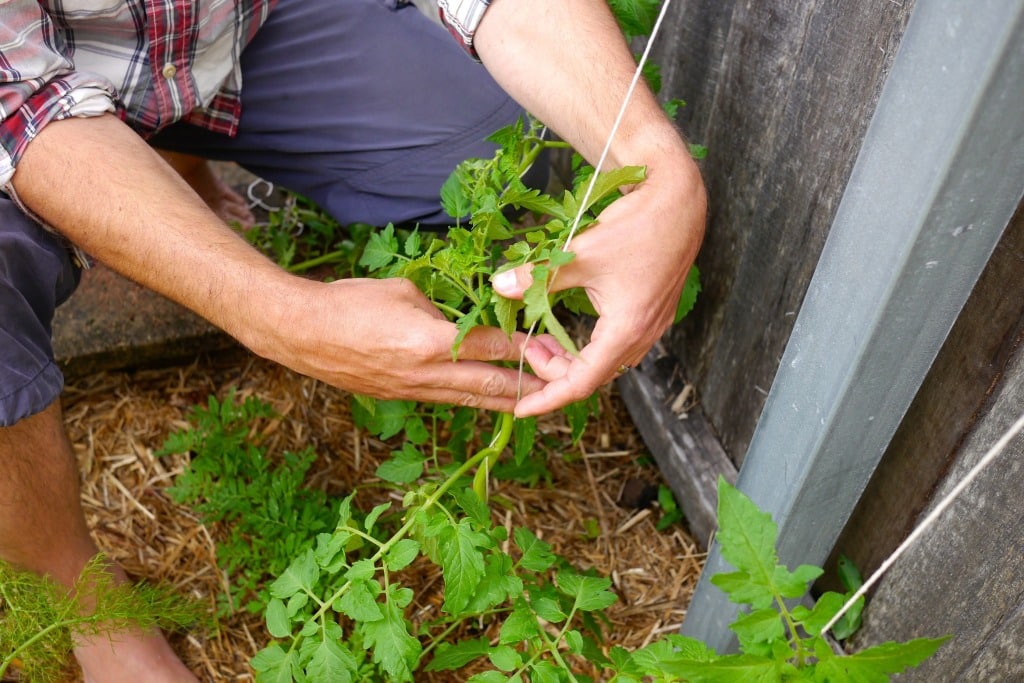
1. Cut a nice long bit of string, and figure out what you’re going to attach the top of it to. But don’t tie it on there yet.
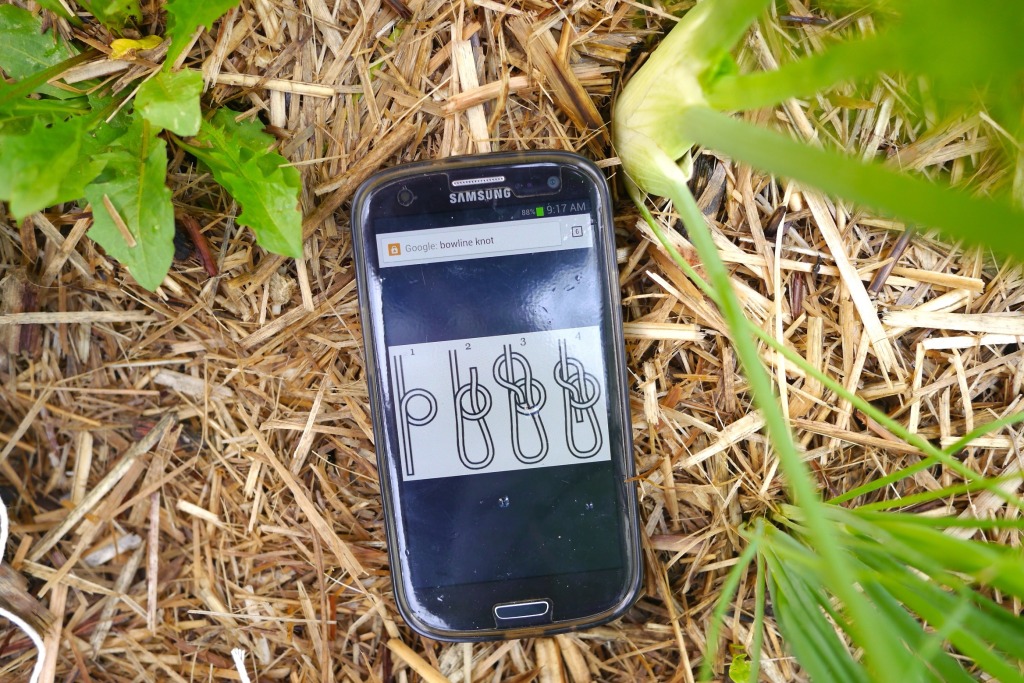
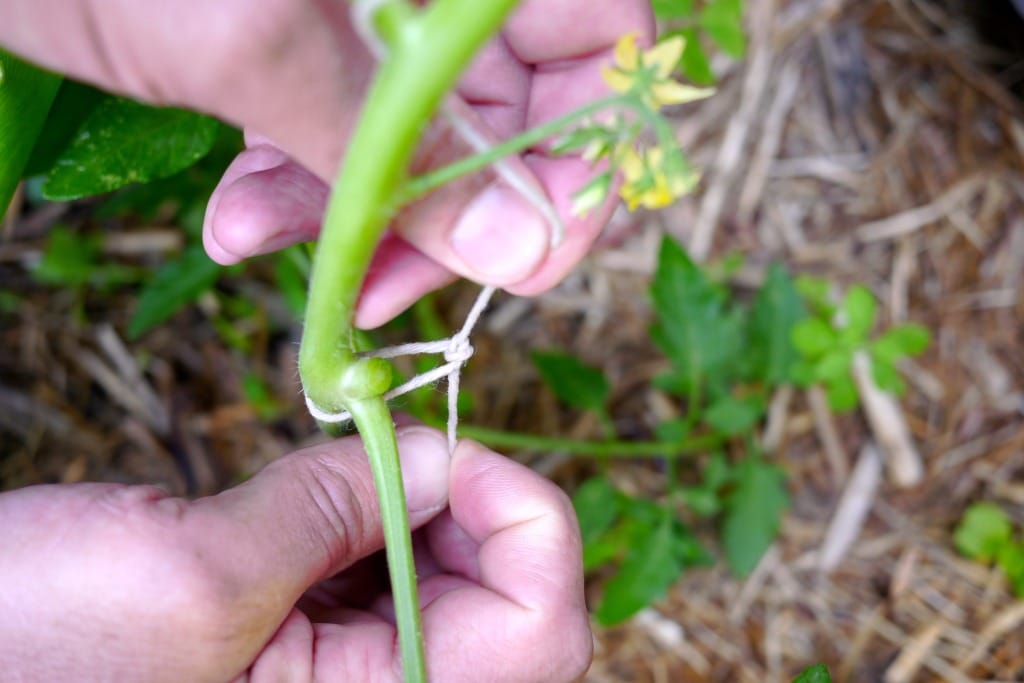
2. Tie a bowline knot under the armpits of a low tomato branch, around the main stem – here’s a pic of how to tie a bowline – you can do it!
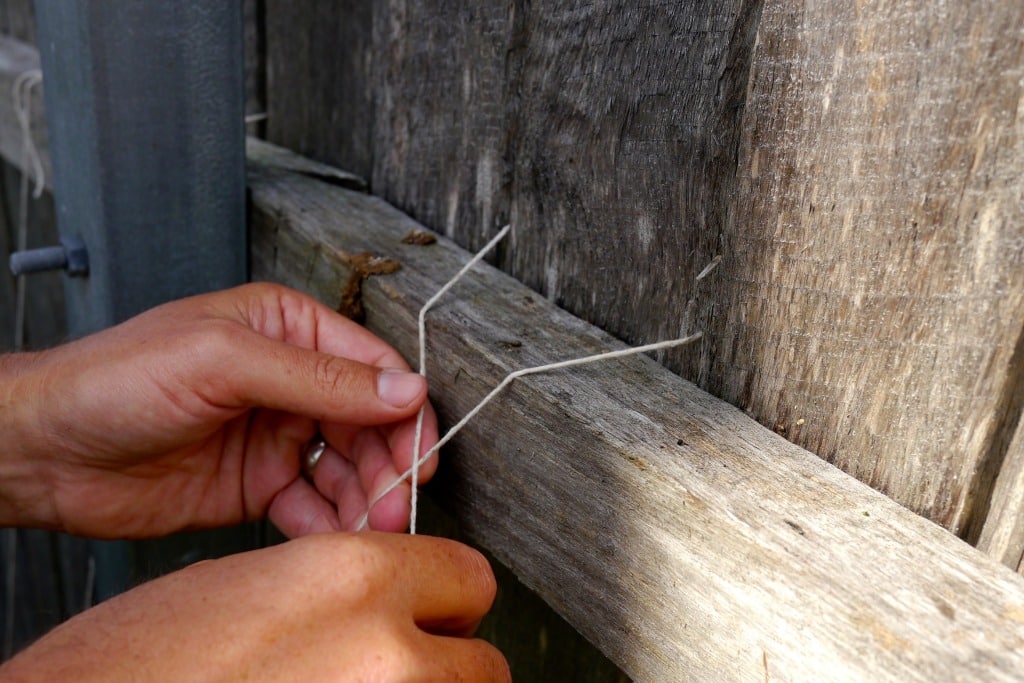
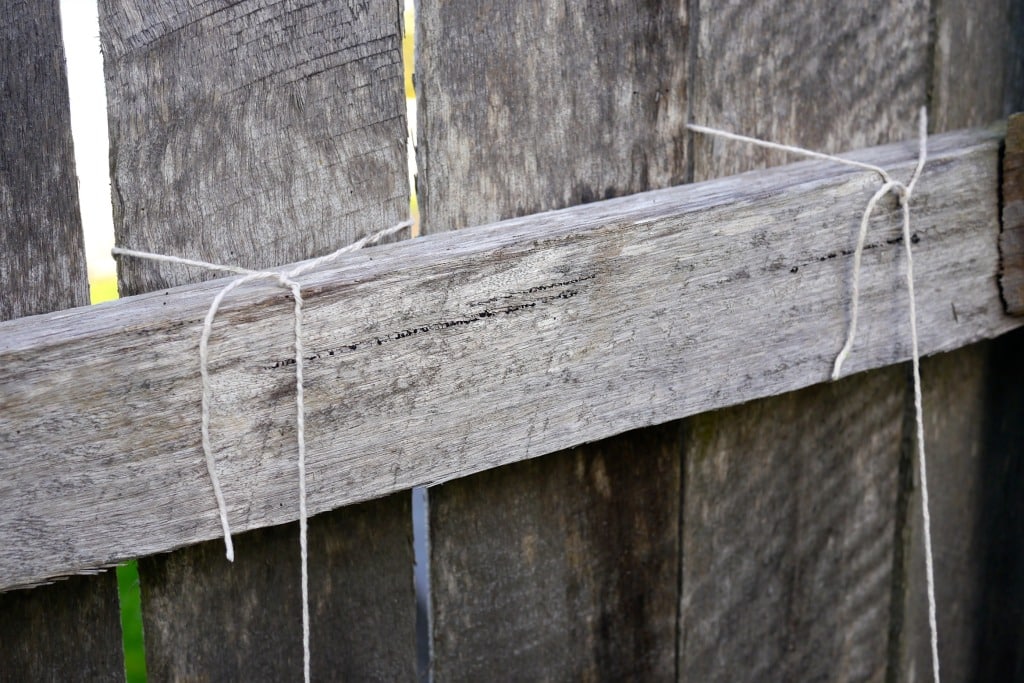
3. Using this anchoring knot to help stand up your floppy tomato plant, secure the top of your string to something solid (and straight upwards). Make sure your string is reasonably tight, as this is the key to this method’s success with twining the plant upwards.
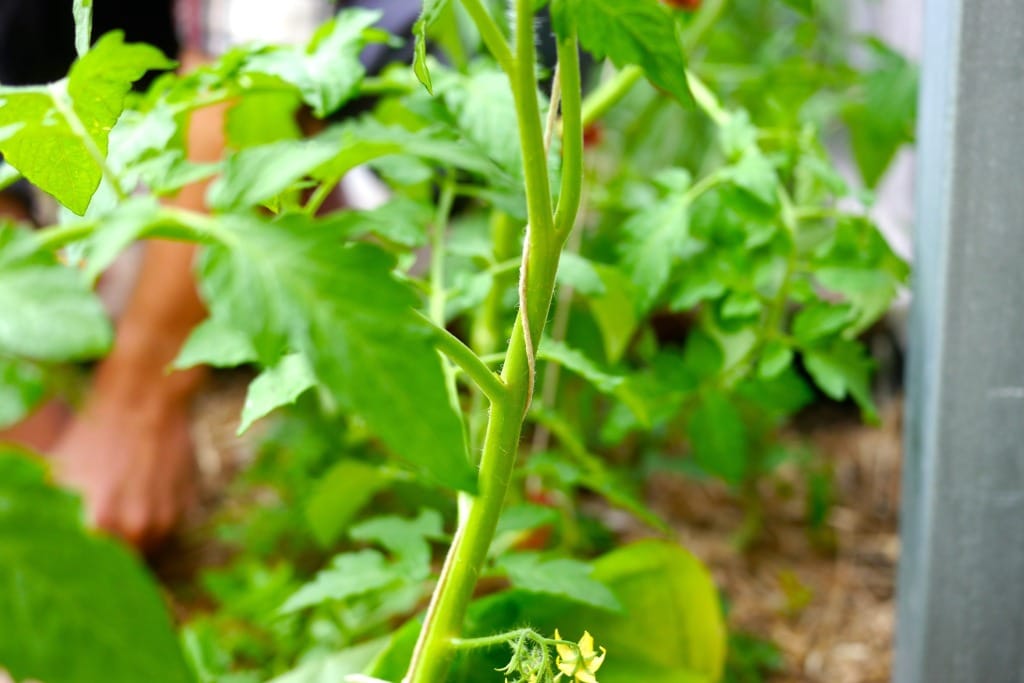
4. Twine the tomato plant’s main stem up the string. BE GENTLE as this can be where you might snap your tomato stem. So, go slow – you’ll soon get a feel for it, once you get to know the plant.
5. Keep twining as the tomato grows. Gently twine the plant around the string as it grows up and up. Hello tomato.
It’s hard to fault this method. Minimal tech, maximum result. Perfect if you’ve got a trellis or a fence to grow against, or something above to secure the string to.
And you just learned a new knot!
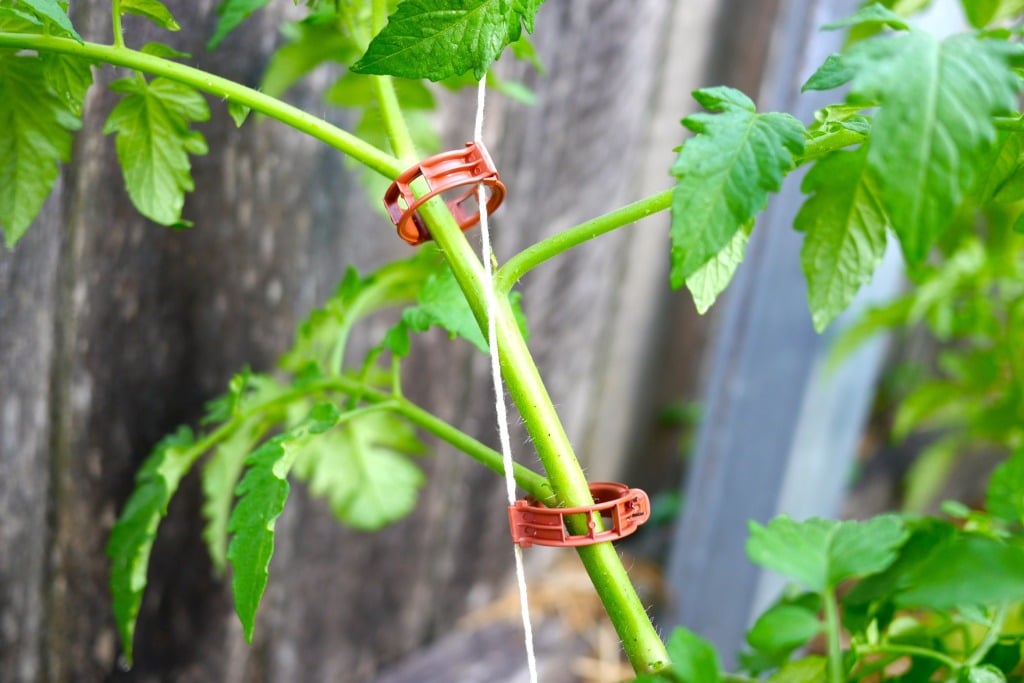
Method 2: Tomato Clips (and string)
While this method uses plastic, there might be contexts where tomato clips are a better idea for you than straight-up string. The clips are re-usable, and will last a good few years.
Maybe you’re not a great knot tier, in which case you could just use one clip down the bottom, and twine your way up from there. Or maybe it’s really windy in your garden, and you need extra security for your tomatoes. Or maybe you’re doing a serious commercial quantity of them.
1. Again, cut a long piece of string, but this time secure it to your top end first.
2. Get a tomato clip and place it under a low branch coming off the main stem.
3. Clip the tomato clip closed so that the hinge hugs the string – it will hold tight. If you’ve got enough tension on your string, this will hold the base of your tomato plant upright.
4. Proceed to tie up your tomato plant either with more clips, or by twining with string.
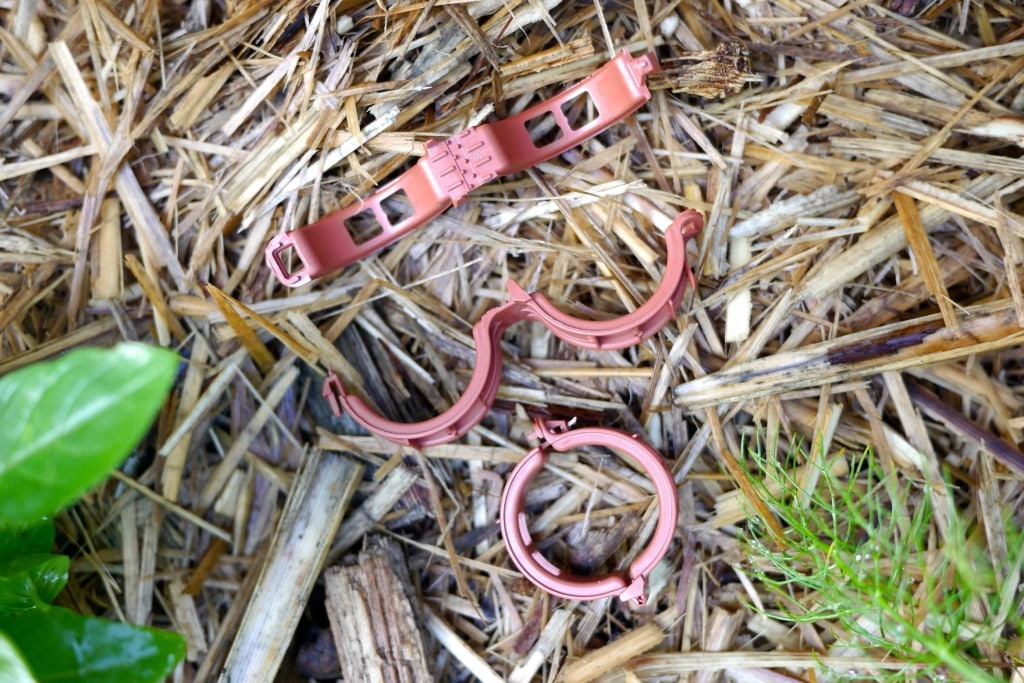
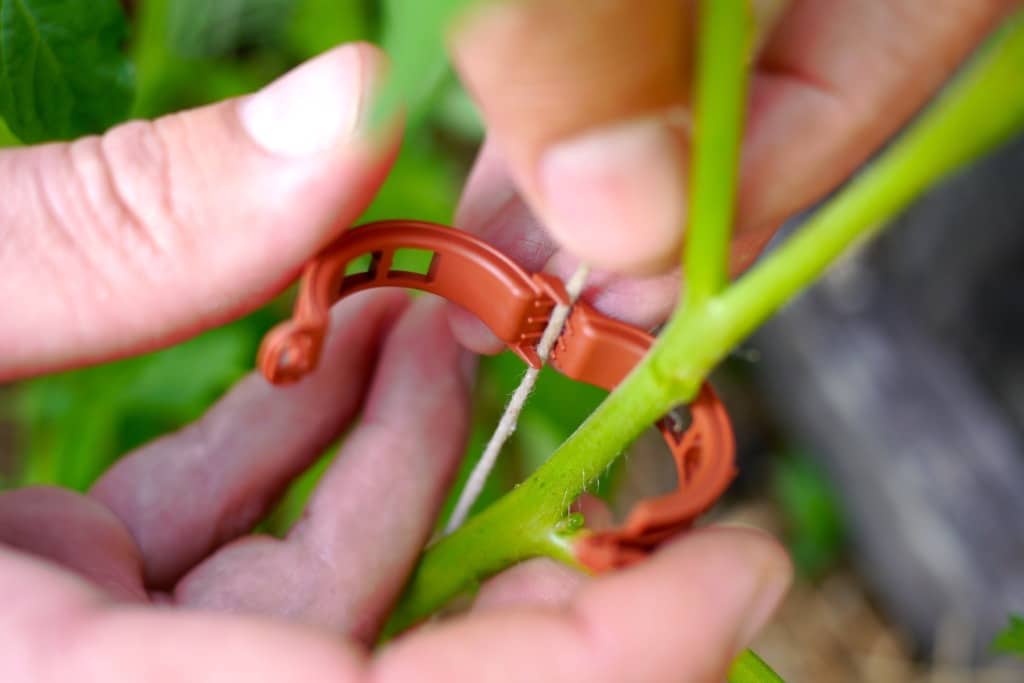
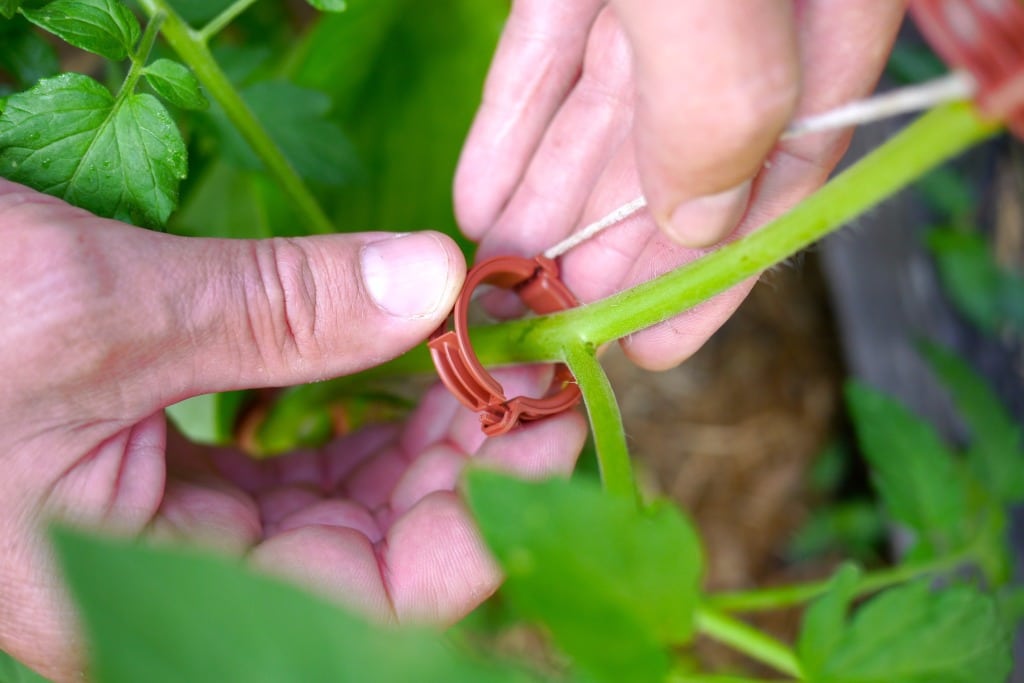
These tomato clips can be sourced from our mates at Allsun Farm – as it turns out, we’ve also got a heap in our shed, so i think I’ll distribute some packets of them via the Milkwood newsletter this week.
The string I’m sure you’ve got, or could get without further ado.
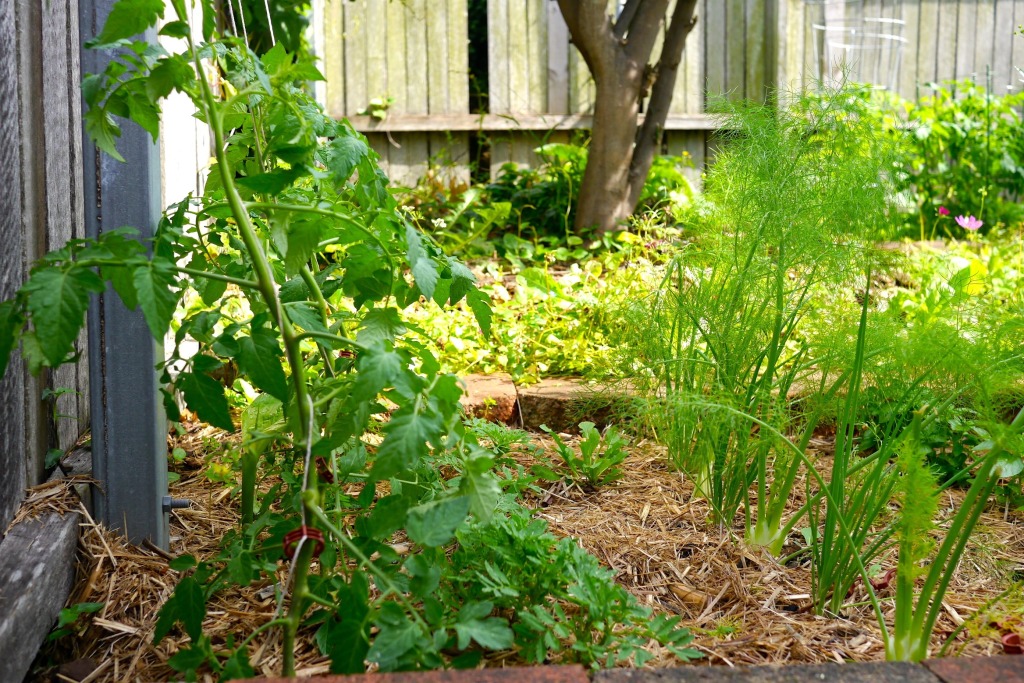
Why sorting out your climbing tomatoes is smart
Which ever way you do it, allowing your tomatoes to climb is a good idea (assuming they’re actually climbing tomatoes) for a couple of reasons.
The first one is fungal disease, which tomatoes can be susceptible to, and which can limit (or kill off) your tomato crop. The best way to protect your tomatoes is to ensure the plants have light and air at every level of the plant, so stringing them up is smart.
The second is that tomatoes love heat, and light. And we’re in this game for maximum tomatoes, right? So. Ensuring your plants get all the light and heat they need is part of ensuring a good yield. Which can’t happen so well if your climbers are slouched over in a pile on the ground.
Of course, there’s lots of tomato types that don’t need to be rigged up to the roof, and which just need a bit of structure to make the most of the season.
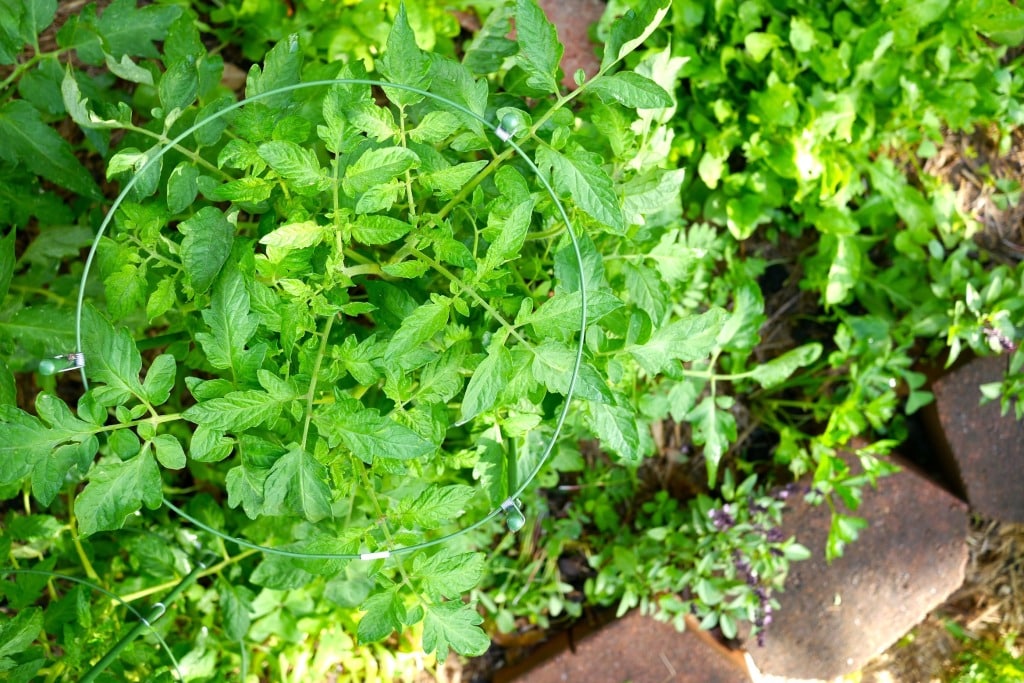
What if I don’t have anything to tie them to?
Yep, I’ve done that too. Planted tomatoes and then realised they’re climbers, without anything to climb. If this is the case, just give them a bit of structure to scramble on, and cross your fingers – for example, you can try:
- Tomato stakes – go old school and fasten them with stockings as they climb like my nana used to (quite successfully).
- The DIY bamboo tomato cage approach – simple, strong and cheap.
- Those metal tomato cage thingys that garden centres have – we’re trying a few of those this year. They seem to work.
Do you have a certain way to help your tomatoes rise up? What is it? Please do comment below – we’d love to hear…
Big ups to Michael Hewins, the crafty market gardener that taught us the tomato twining technique. He teaches Serious Backyard Veggies + also Intro to Market Gardening courses with us in Sydney + beyond.
See all our posts about tomatoes (growing, preserving etc) HERE…
Tomatoes are one crop out of dozens. Our Organic Vegetable Gardening course walks you through a whole season of the rest.
The next class opens for bookings on Monday 7th December 2026, and starts on Monday 4th January.Just starting out with veggies generally? Our free Veggie Gardening: a Beginner’s Guide is a good place to begin.