
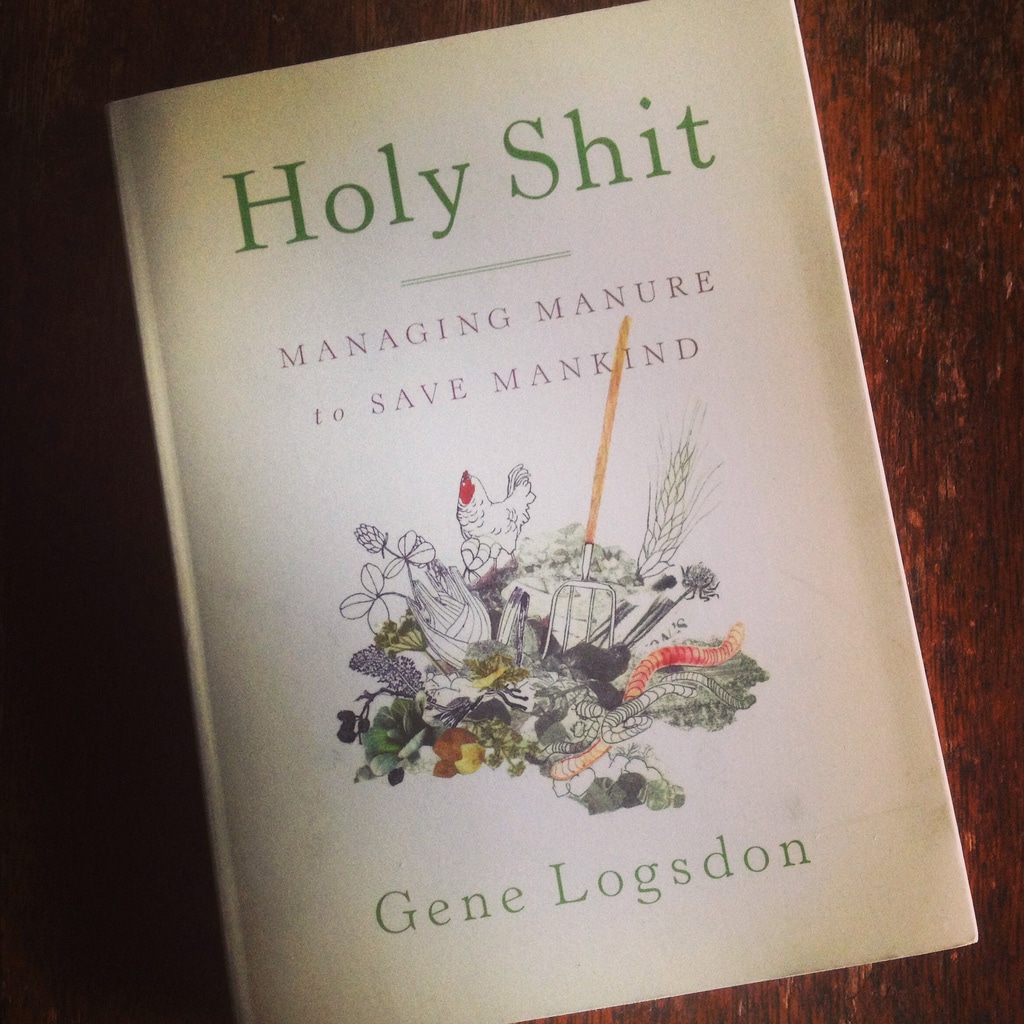
What is most intriguing to me about this little book is that, once again, good writing has allowed me to re-discover a subject that I thought I had it together on.
I mean, we farm naturally at Milkwood. We know and we love and we dig manures. Regularly, even. Yet, reading this really excellent book, I’m reminded again of just how important and essential it is to cycle manures as part of replenishing what we take from the earth. And how completely we’ve forgotten that in the last 100 years.
And how urgently we need to get our shit together on this subject, quicksmart…
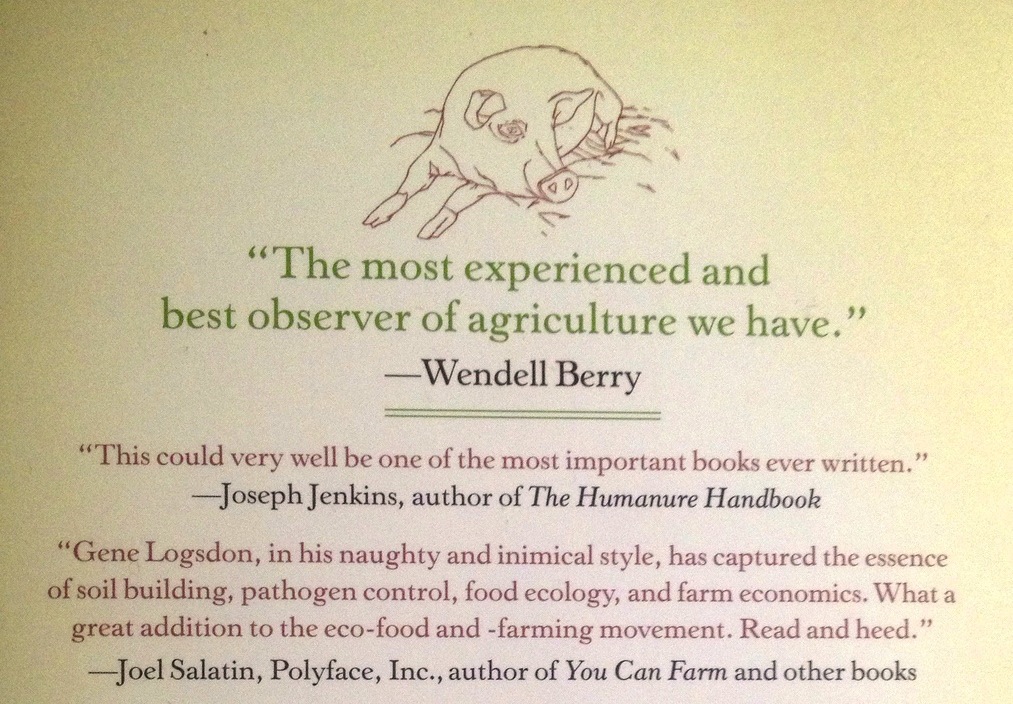
Gene Logsdon is one of my regenerative agriculture writerly heroes – he’s the Contrary Farmer with a casual way of nailing his chosen subject while charming you with farming anecdotes. But Holy Shit: Managing Manure to Save Mankind is a step up from everything else of his that I’ve read – it really is quite a special little book.
To cut to the chase, in Holy Shit Logsdon nails the importance of integrated nutrient cycling to creating regenerative small farm systems. That sounds reasonably simple and not too world-shattering, I know.
But it is, it really is. The development of chemical fertilisers and their substitution for holistic nutrient cycling on our farm lands has given us the industrial food complex we all live in today. And that, my dear friends, is an Extremely Big Deal.
It is so big a deal, in fact, that the issue of fertiliser is the central issue at the heart of the ‘Can the World Feed Itself‘ debate. Because in order to grow enough food for a growing planet, we need to magic more and more nutrients to put into the soil, so we can then harvest those nutrients in the form of annual vegetables and grains, each and every year.*
Yes! I know that you probably also consider this Big Deal a very obvious one. You’re informed. You know this stuff. We’ve all grown enough veggies to know that the fairies don’t bring the nutrients to the garden and that if we want good organic veggies to come out of our gardens we have to put effort, energy and composted manures into our gardens.
Thus, Holy Shit is not focussed on bludgeoning you with facts about chemical fertilisers. Nor is it focussed on pointing out that various reports have consistently been released explaining that small scale, organic agriculture can likely feed the world better than chemical-driven industrial ag.
What Holy Shit is, in essence, is a delightfully quirky, enjoyable and above all bloody useful conversation. Which just happens to be about manure. Chicken, cow, pig, sheep, human, horse, dog, cat and bat.
The conversation ranges from different animal bedding techniques and the benefits of deep litter systems to thoughts on cow urine collection, bat-attracting towers (for guano collection), dung beetles and of course the vast and mostly ignored (in the west) world of humanure applications. It considers the probable rise of factory farms whose primary product is manure, with a by-product of beef or eggs.
Above all, however, Holy Shit is about farming well. It’s a stealthily upfront argument for the far-reaching benefits of keeping food production systems small and human-scale (as opposed to large and robotic), and to keep the nutrients on an integrated farm constantly cycling.
For the benefit of all aspects of that farming system, and the communities and foodsheds that intersect with that farm.
And that is the Big Deal of this little book. It’s not a How-To. It is a Why-To. Why to farm and grow food this way, all over our precious planet. Why it’s entirely possible, and why we should get a move on, right now.
If I wasn’t already involved in a farm that operated this way, I would be, after reading this.
Holy Shit: Managing Manure to Save Mankind by Gene Logsdon
Published by Chelsea Green
>> More posts on nutrient cycling at Milkwood.net