
The idea of forage farming has gotten a bad rap in recent years – it’s considered akin to subsistence farming, which no-one in their right mind would leave their well paid city job to go and do, right? I mean, we’re successful people. We have serious dreams.
We didn’t work this hard and buy land just to dig in the dirt for a random root or something for dinner. We expect to invest lots of energy into creating food producing systems that look like a serious farm, that matches up with our serious dreams and serious commitment to downsizing, while trying not to look like peasants.
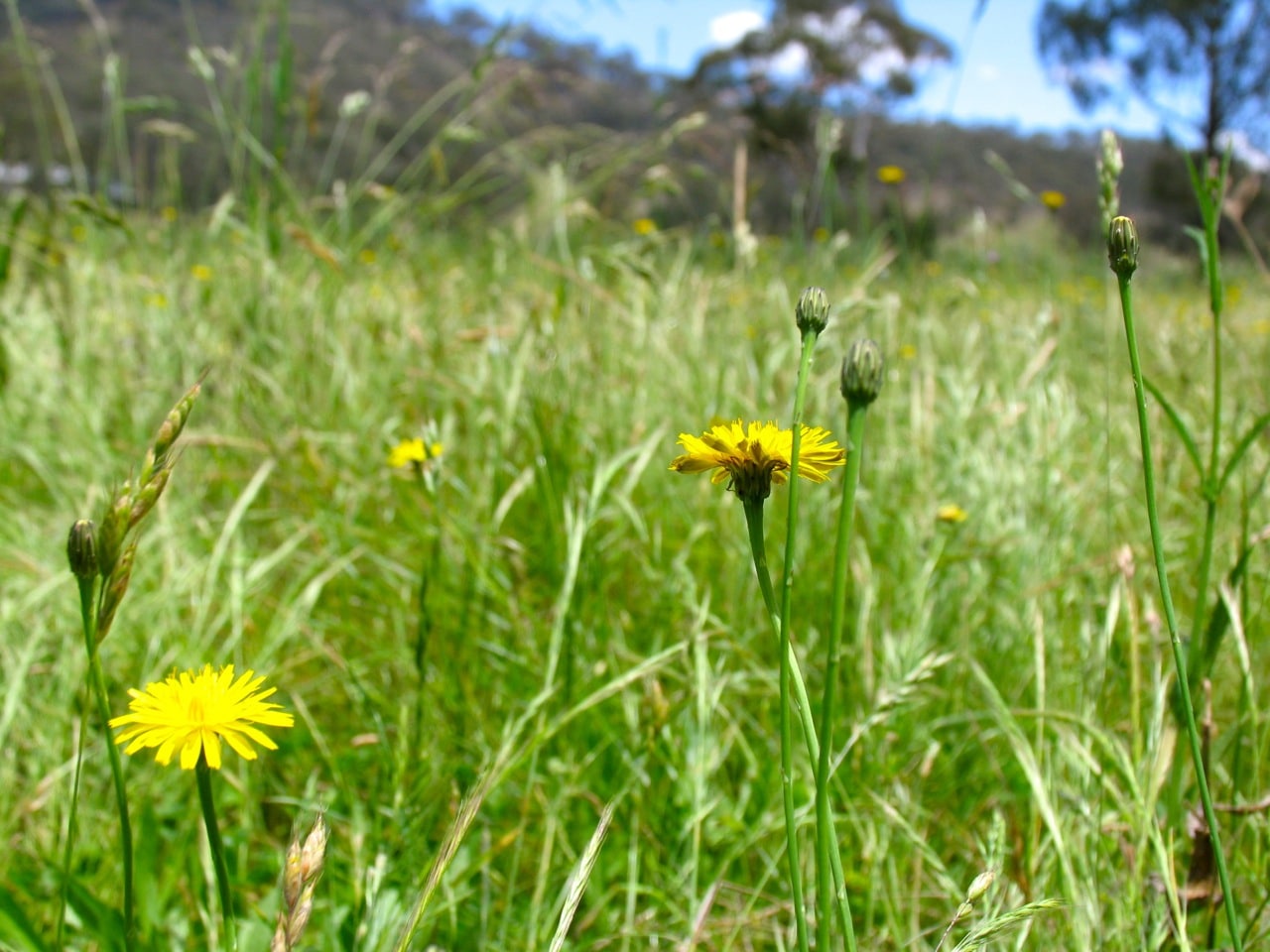
Cats ear flowering on the Milkwood Farm creekflat – an incidental resident of the farm that is also a great dynamic accumulator and bee forage with edible leaves…
Fair enough. That is a possible road. But forage farming can be a beautiful thing, and its not just about grubbing in the dirt for roots (though if you’re smart, you’ll do that too – lots of goodness down there).
Forage farming is the idea of living lightly in landscape. Harvests are of ‘wild farmed’ foods, like edible, nutrient dense weeds, honey, tree crops, squab, fish and others. Literally (if only partly) living off the land.
Forage farming can be incorporated as a facet of a vibrant small farm or homestead, to provide resilience and ‘work the edges’ of the years’ cycle of harvests which come together to form a diverse, year-round food supply.
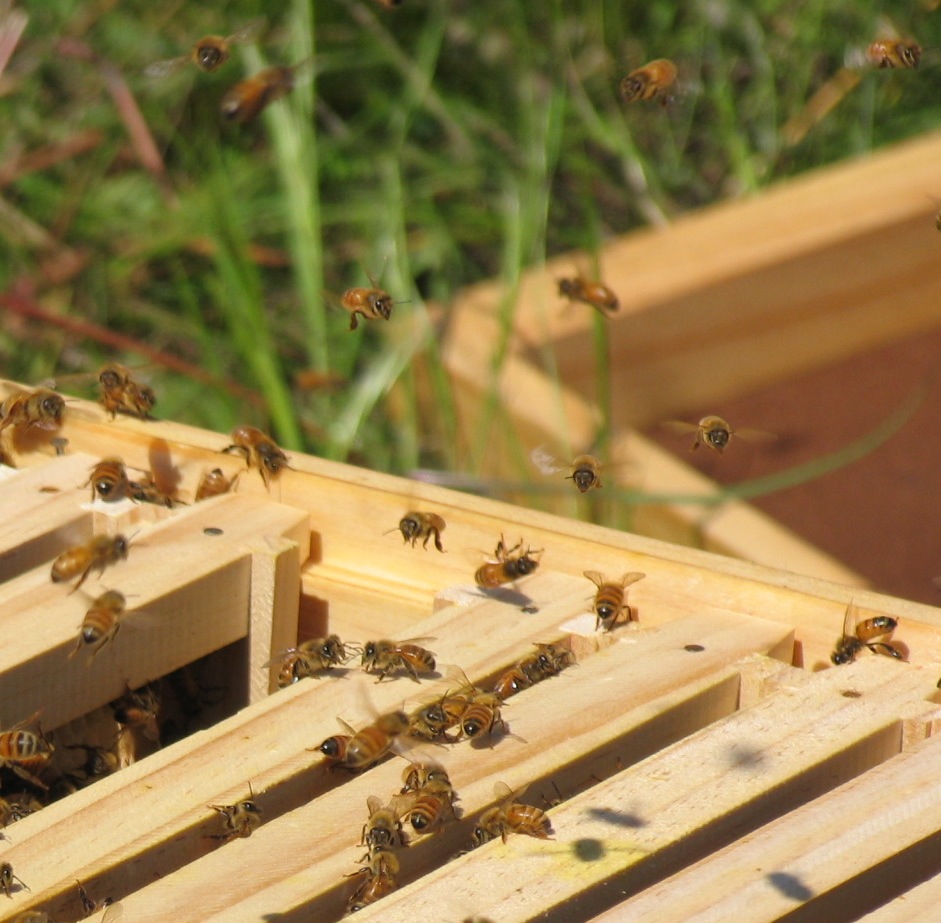
Warre hive at Milkwood Farm
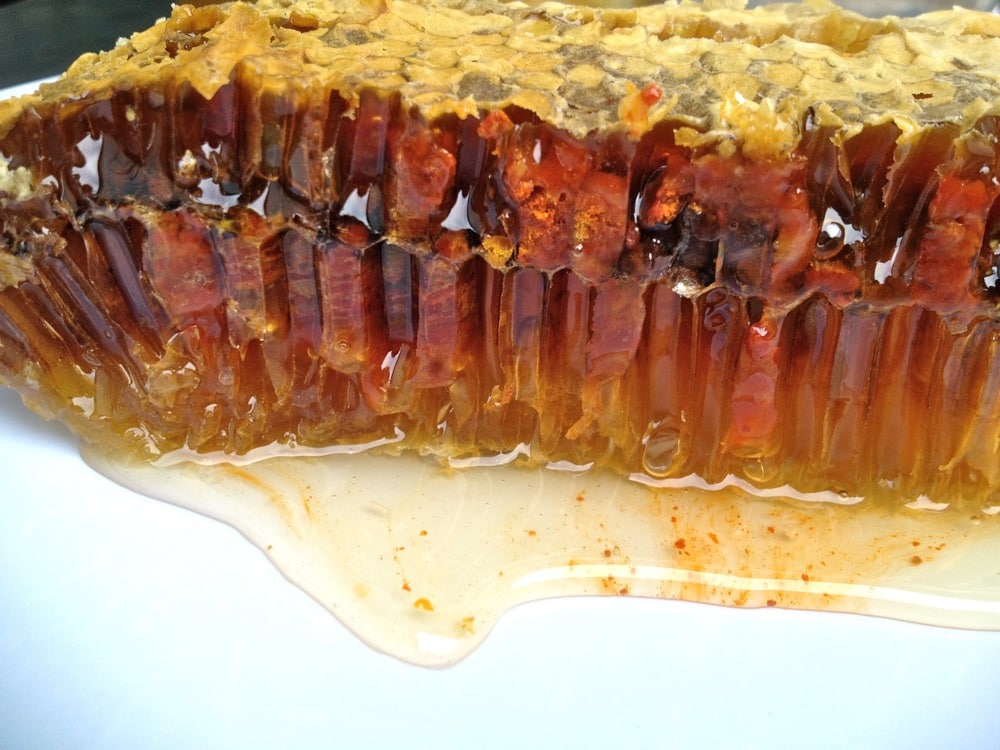
Milkwood Farm honeycomb (chokkas with pollen as well as honey). A perfect map of the nectary in every direction up to 5km from our farm
Take Honey production. Naturally managed hives, I mean, that are sited in the landscape and live in that same place, year in, year out. This is forage farming at its most delicious.
Honey is wild food at its best: you site the hives, tend them with care (and not too much intervention) and… that’s it, till harvest time. The bees do the foraging, spreading out in a 5km radius from the hive.
The result is intermittent harvests which are a nutritional map of your farm and beyond, speaking in terms of nectar and pollen. Condensed sunlight, if you like, which is an incredible food as well as being medicinal. And it even stores for 3,000 years. This is a harvest to be appreciated.
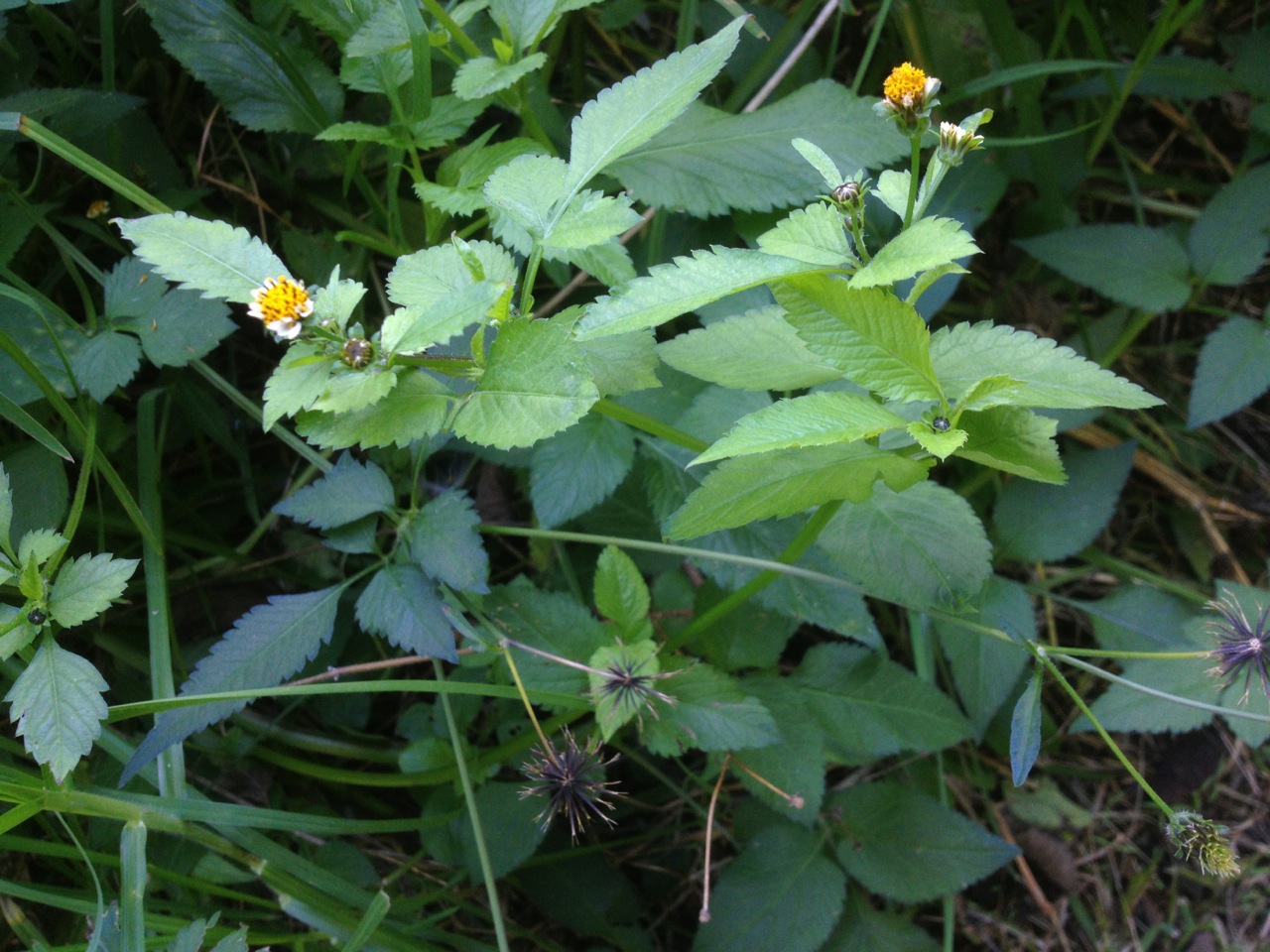
Cobblers pegs (Bidens pilosa) – green tips are edible and the flowers and leaves are used extensively for medicine in some cultures
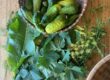
Take wild herb foraging. Fortunately wild herbs (ok most of us still call them weeds) are becoming somewhat funky, which is a relief. Even if they weren’t, however, the nettles and dock and cobblers pegs and chickweed and dandelion or whatever else grows in the fields, creeks and hillsides of your area, are potent foods.
Regardless of your attitude to weeds (and see the comments here for a lively discussion of same), chances are, if you went for a walk right now, you’d find some. And some of them would be highly edible. So learn to identify them, and if you’re sure they’re not sprayed with something nasty, get on with eating them.
In the spaces beyond your veggie garden (bless it, don’t get me wrong), many wild herbs have concentrated levels of nutrients which are of great benefit to a healthy diet. And as you don’t cultivate them, there is an important aspect of resilience to their existence.
On top of all that, many wild herbs and weeds are indicators of what’s going on down below in your soil in that particular patch… so by engaging with this foraged harvest you are directly skilling up on what’s happening in your landscape, both above and below the surface.
Other forage harvests could be things like squabs from dovecotes – while there is initial setup involved for this system, the potential yields of squab for your table and high-value guano for your other growing systems might make you consider a dovecote a reasonable input of energy to create.
And then there’s the foraging in the wider environment, which may not be right at your back step, but are likely nearby… fish from the streams and feral rabbits on the creekflat (swap out ‘rabbit’ for your tastiest local feral animal as needed). Seasonal mushroom harvests from your nearest pine plantation.
All of which have the potential to provide excellent diversity to your diet without year-round system maintenance.
There’s also the idea of creating forage systems, with an intention to progress that system towards minimal maintenance other than intermittent harvest – tree crops (with under storeys of herbs etc) are a winner here… hardy plants that yield multi-layered goodness, like:
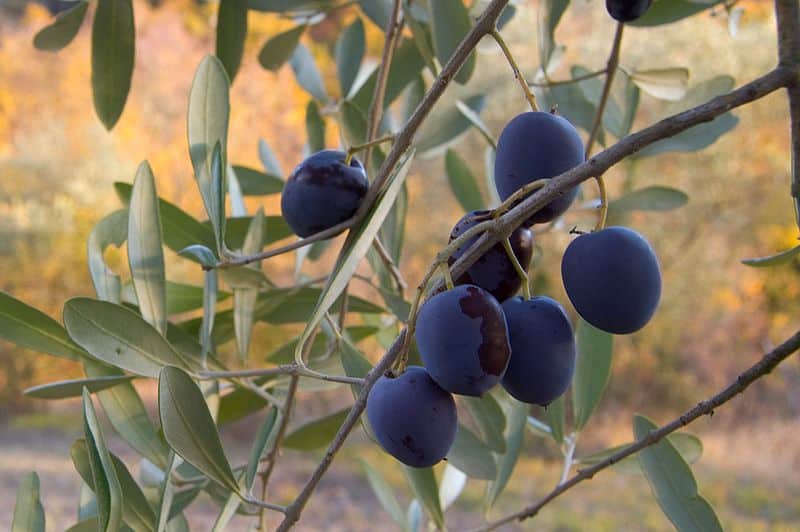
Olives: which yield in about 10 years from seeding and are some of the hardiest trees on earth, as evidenced by the 2,000 year old specimens to be found across Europe. Many cultivars are good for both eating and oil extraction, with very minimal maintenance once established.
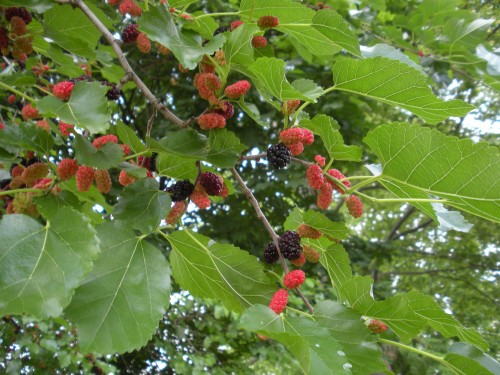
Mulberries: hardy to a fault and with multiple yields, starting with protein-dense leaves that make great feed for livestock (crude protein 25%). While your small flock of forage-to-protein convertors (sheep or cows) are chomping down on the leaves, there’s also the mulberries to consider, which are both abundant and delicious. The berries are also excellent for fattening pigs.
Of course, if you’re intending to set up a homestead block or small farm using permaculture principles and design, the foraging aspects of your potential site, and the wider environment, will be something to consider in your design.
But no matter where you live right now, it’s worth remembering that the ability to engage with foraged harvests is all around us and should be part of how we approach the landscapes we live in.
Foraging is a great way to get to know what grows where and why, to live lightly and well, and to build a lasting relationship with the particular piece of earth that you call home.
>> More posts about small farm permacultures
We run Permaculture Design Courses that teach best practice whole-systems design, so that students can learn how to design and create resilient systems for abundant living, wherever they may put down roots…