
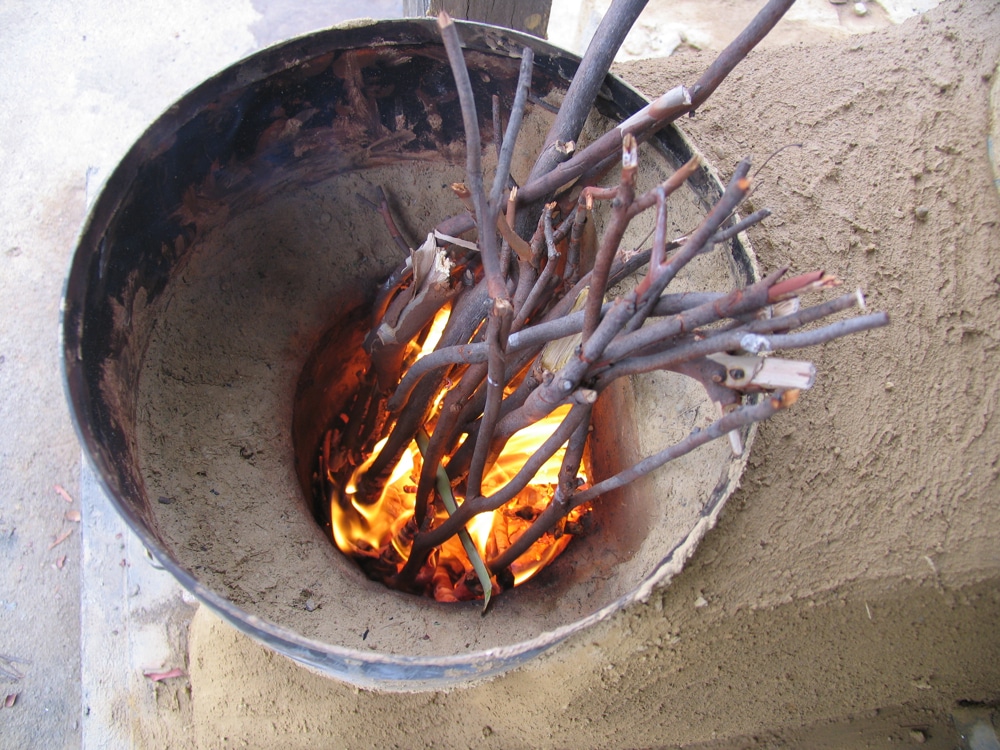
At Milkwood Farm we love both our rocket stove water heater and our mini rocket stove, but with winter taking hold I’m dreaming of new ideas, so I thought I’d review what else is out there.
DIY rocket stove technology is exploding world-wide at the moment – here’s a couple of the treasures I’ve come across:
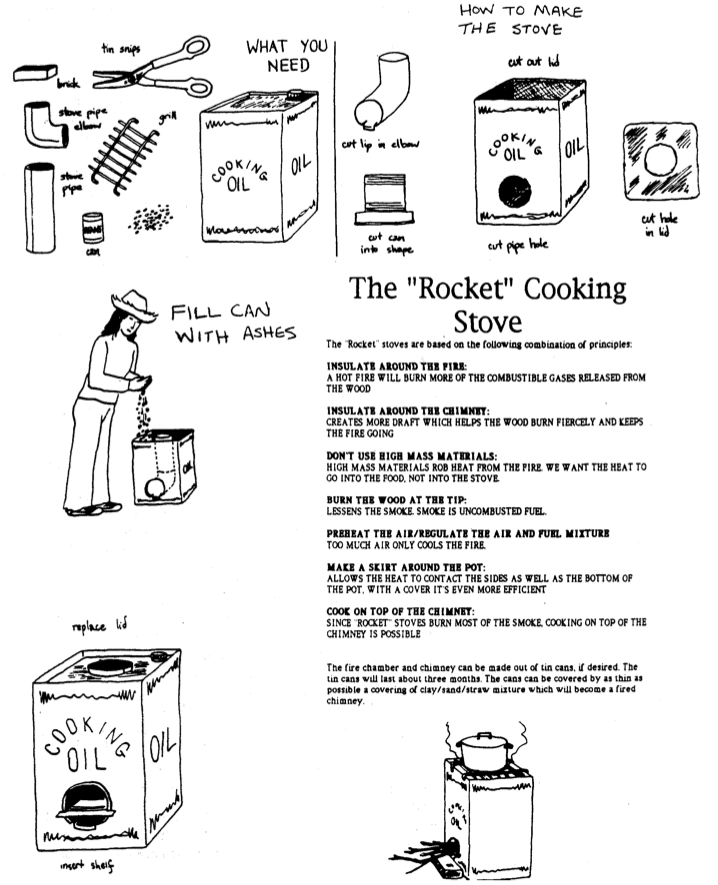
The first thing i discovered was who initiated the rocket stove idea. Previously i’d had the fuzzy impression that this technology was dreamed up by the fabulous Ianto Evans, as outlined in his excellent book Rocket Mass Heaters – super efficient wood stoves you can build (with Leslie Jackson). But it turns out that the originator of this technology was Dr. Larry Winiarski from the Aprovecho Institute.
The guts of Winiarski’s work is encapsulated in a very simple document called
Ten design principles for wood burning stoves
And out of this work came the idea of rocket stoves, which a worldwide community of folks with both a clue and a need picked up, ran with, and continue to refine.
The Aprovecho Institute produced an excellent basic hand-out on rocket stoves and other cooking technologies called
Capturing HEAT: Five Earth-Friendly Cooking Technologies and How to Build Them.
It’s a great little introduction to low-energy cooking techniques.
Rocket stove technology is exciting for a couple of reasons, but the central two are both simple and profound: the first is the fact that you don’t need much wood to run a well-made rocket stove. The second is that a well-made rocket stove gives off very little smoke.
Anyone who relies on wood-burning systems for heat of any kind, will automatically appreciate both these factors.
Whether you’re schlepping wood every week from the woodpile, or gathering it from the forest nearby (or far away, for that matter), the less wood you have to use, the better. Both for the gatherer, and for the forest being gathered from.
On an everyday level, this factor is extremely attractive. Take your living situation out of the every day, however, and into crisis mode where a community lacks automatic access to the raw materials to heat or to cook, and rocket stoves start to potentially become life changing, and even life saving.
The not-so-much smoke thing might not seem such a big deal to us westerners, but it’s both a measure of energy efficiency, a question of pollution and, for households where cooking is done inside on a wood stove, has a huge impact on the health of that family.
From this basic idea, a million DIY rocket stove experiments have unfolded. And many of them are very cool indeed. Some of them are domestic scale, and some of them are community scale. Some are for cooking, and some are for heating. All rely on maximum effect for minimum input. Energy efficiency at its best?
First, some diagrams. i do like a good diagram, especially one that de-mystifies something truly useful:
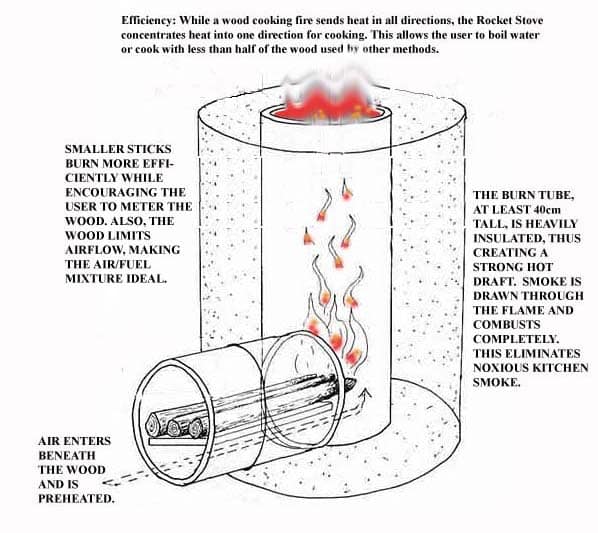
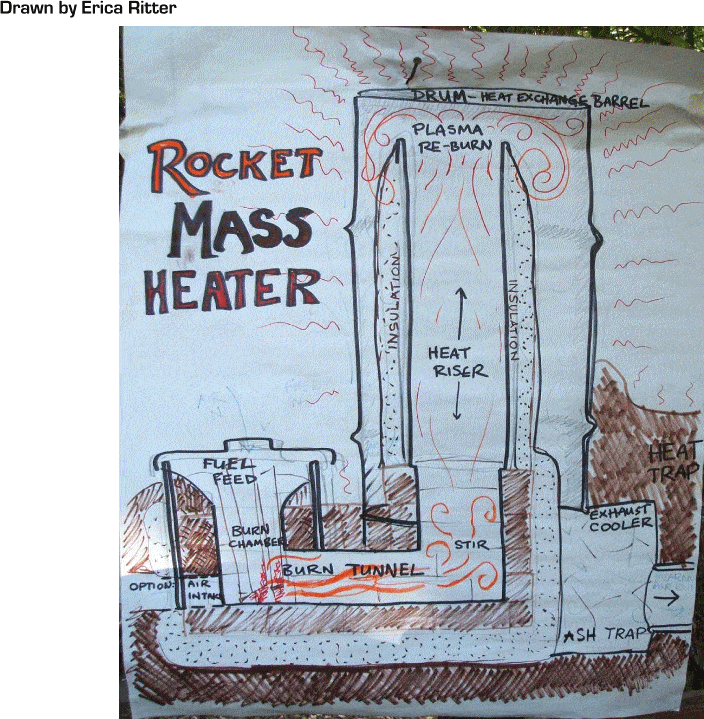
Rocket stoves are awesome for a variety of applications. Some of these include:
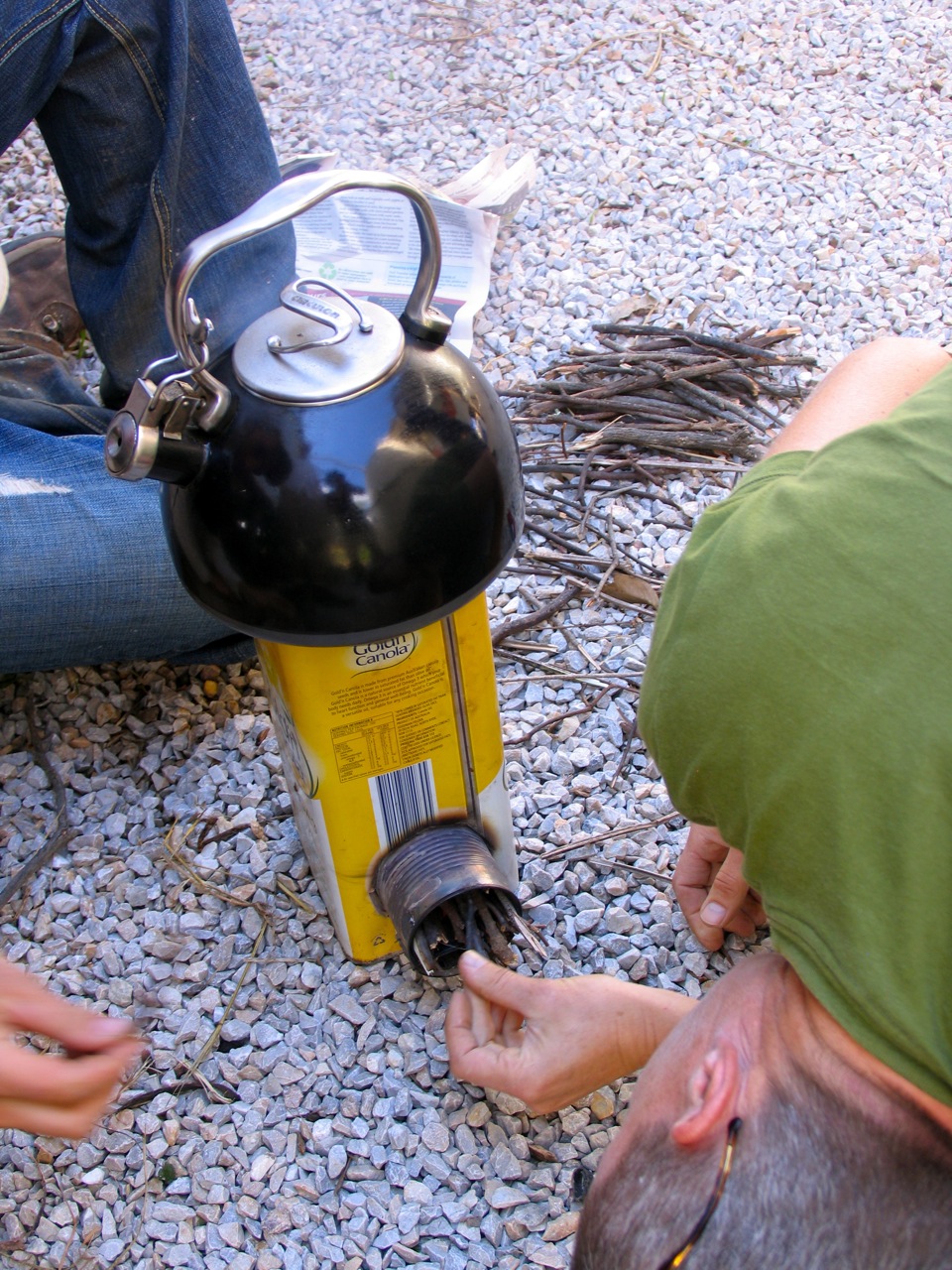
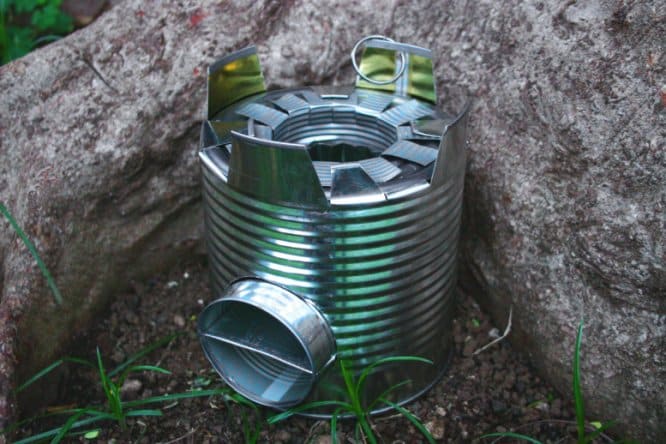
This cutie was one of the designs our mini rocket stove was based on.
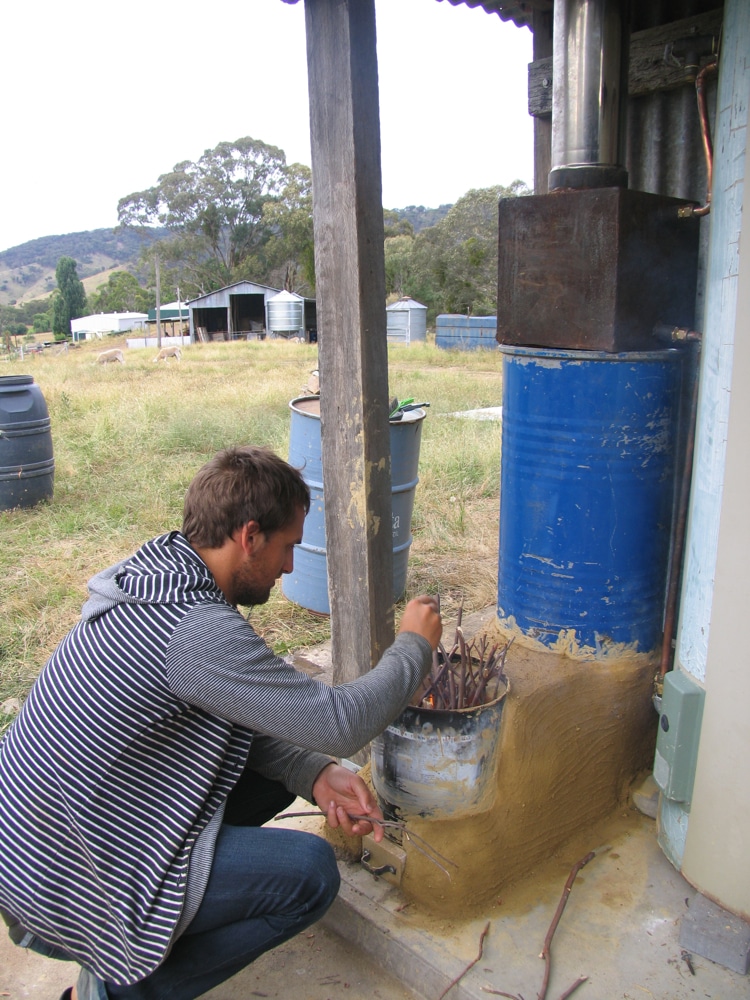
Heating water for showers at Milkwood Farm, via our rocket-powered shower
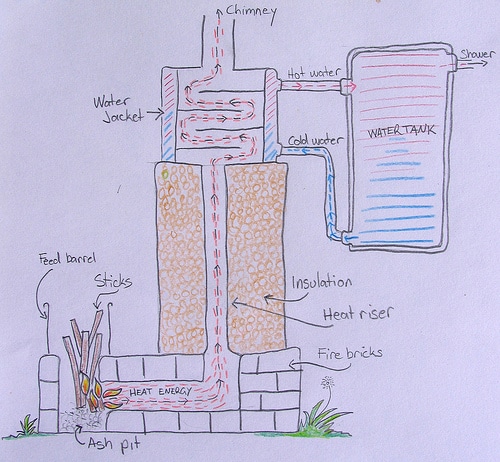
A digram of the Milkwood Farm rocket powered shower
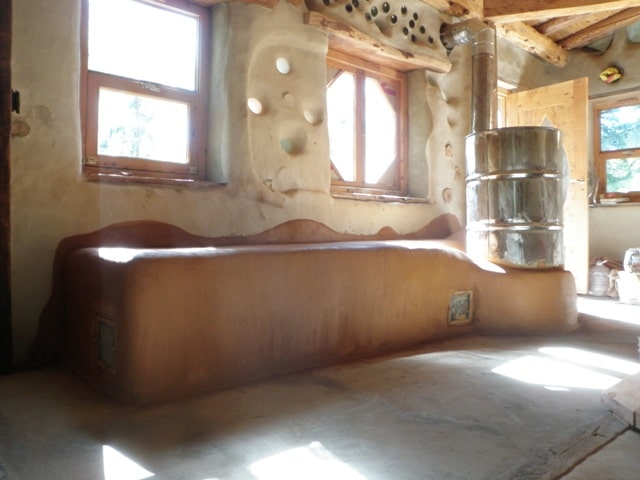
An extremely cosy looking indoor rocket mass heater with heated cob bench
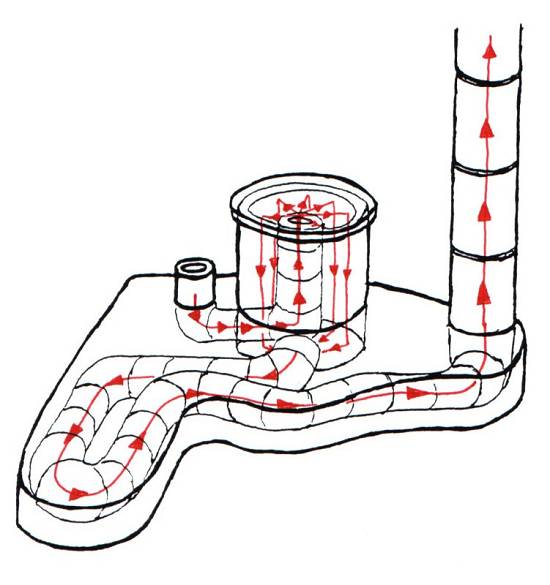
A diagram which explains the basic logistics of above system
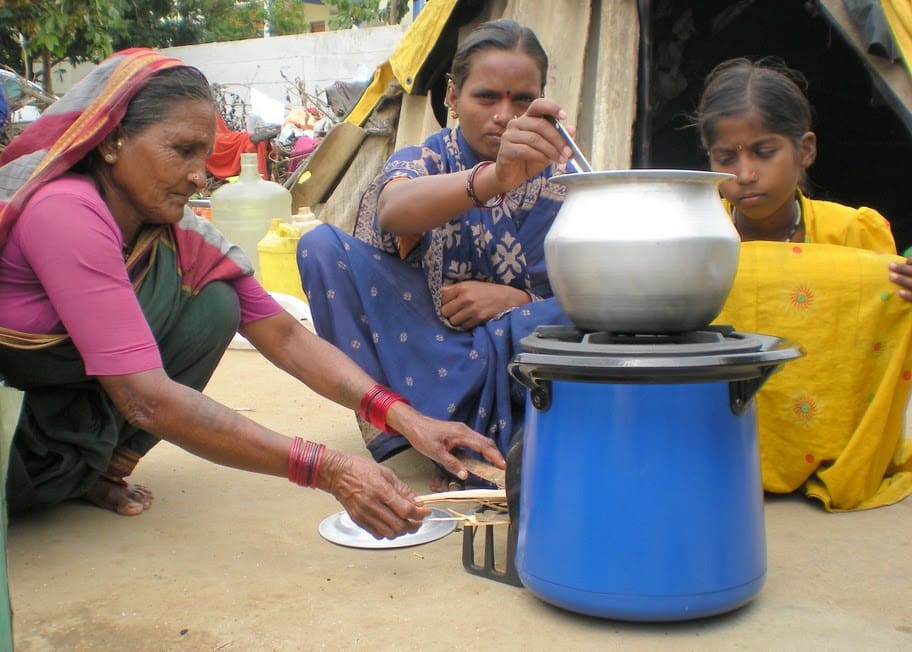
A rocket stove making lunch. This is a good thing. Especially with that cup of tea.
Beyond these basic applications, there are heaps of amazing folks refining bread-baking rocket stoves, industrial and community scale cooking with rocket stoves, food drying and many, many things I have no doubt not yet come across. Ahrg, the awesomeness!
Do a youtube search on rocket stove and you’ll get all the how-to’s you can handle… however in the course of my meanderings i noticed that Aprovecho have a new ‘what-why-how’ video for their institutional stove model, which is perhaps a good place to start:
The Aprovecho Institutional Rocket Stove
Followed by a great little tour of 12 domestic-scale rocket stoves as outlined by Paul Wheaton:
12 rocket stove mass heaters
I think our next rocket stove project will be a rocket stove bread/pizza oven for our tinyhouse courtyard… anyone out there have experience in building something like this? Any advice before we take the plunge?