
Harvesting rainwater is an excellent strategy to increase your household’s resilience, and it’s available to (nearly) everyone. Got a sky, that rains sometimes? Well, you can begin! Let’s get harvesting.
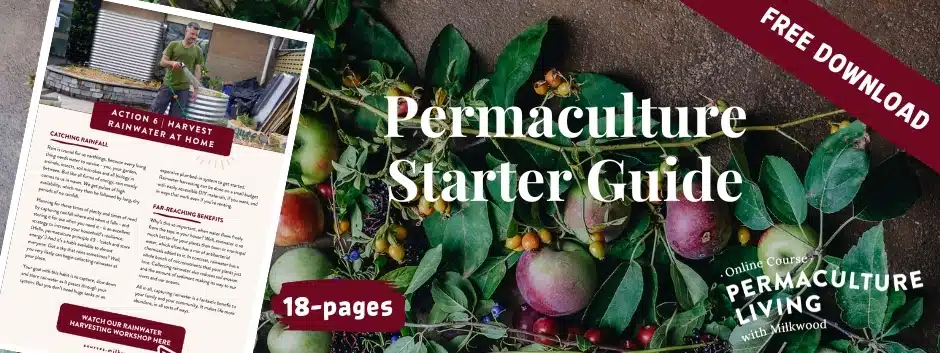
Harvesting rainwater is one of seven climate-positive actions in our free permaculture living starter guide, if you’d like the others too.
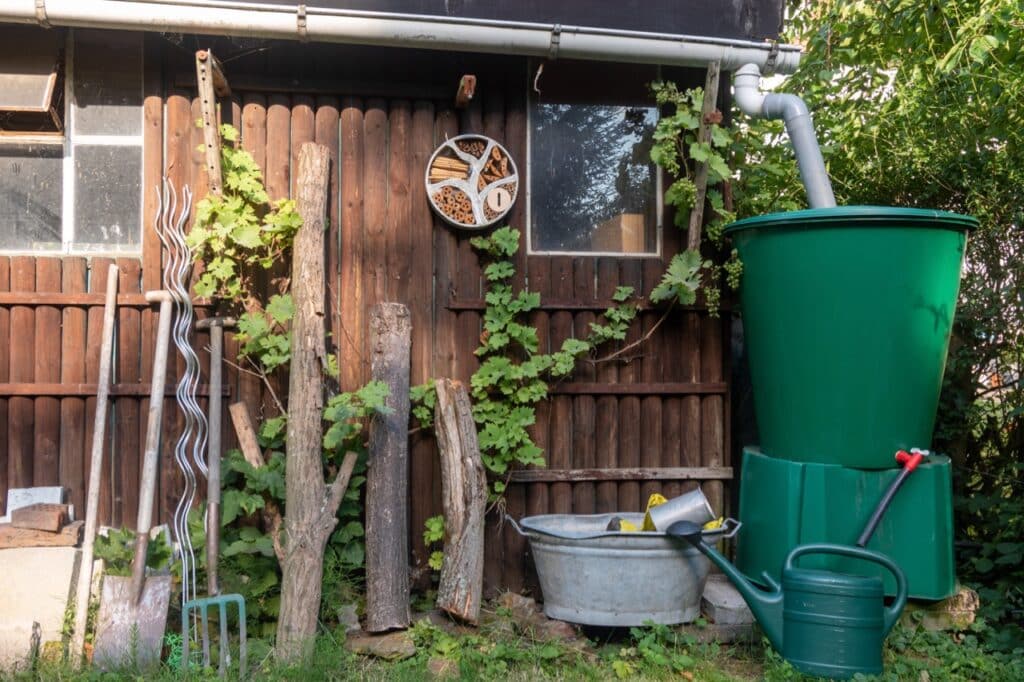
There’s so many simple hacks and systems you can set up at your place, even if you’re renting, to catch, store and use rainwater to make life more abundant, in all sorts of ways.
We know all this for sure because we have been designing rainwater harvesting systems and solutions – in rental backyards, community rooftop gardens, and at the farm scale too, for over 15 years now.
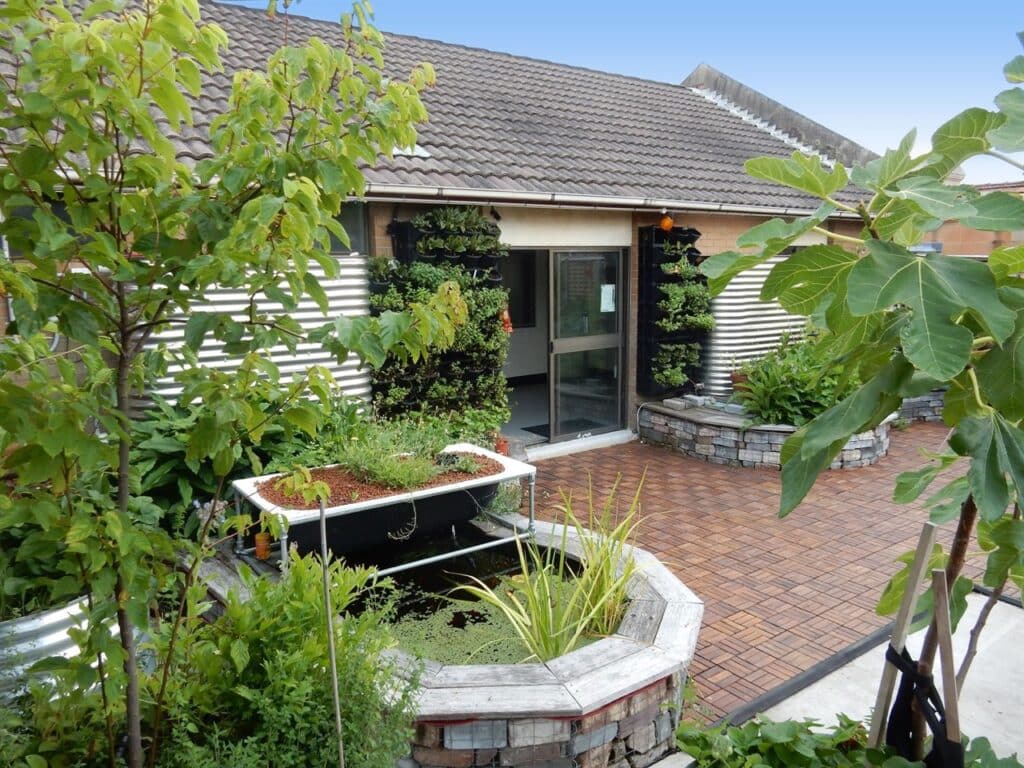
And so we’ve learned a lot about what works in different places, on different budgets – whether you’re harvesting rainwater to drink, to store for later, or to divert to plantings around your home.
So here’s a recording of our ‘Rainwater Harvesting for Beginners’ mini workshop… full of ways that you can use rainwater harvesting techniques to make your place more resilient, reduce bushfire risk, increase abundance AND better support your local watershed and ecosystem, too.
This workshop is based on a lesson from our acclaimed Permaculture Living online course, which we welcome you to check out.
By the end of this workshop replay, you’ll be brimming with ideas to get started with harvesting rainwater at your place, and making your space somewhere that you’ll truly love to live in.
Rainwater Harvesting – further reading + resources
Alrighty – let’s get planning! Here’s a resource bank to get you started – some of our favourite books, calculators, websites, guides and inspirations for getting started with rainwater harvesting at your place…
Our favourite go-to Rainwater Harvesting resources
- Rainwater Harvesting – Brad Lancaster’s website. If you visit just one link today, let it be this.
- Rainwater Harvesting for Drylands I + II – books by Brad Lancaster – not only useful for drylands!
- Rainwater and Permaculture free guides – more Brad – you see what we mean yet?
- Tanks, Cisterns, Aquifers, and Ponds For Domestic Supply, Fire and Emergency Use – book by Art Ludwig
- Creating an Oasis with Greywater – book by Art Ludwig (again) – yes this is a greywater, not rainwater specific book, but the ideas cross over and are excellent.
- RetroSuburbia – book by David Holmgren – particularly 5.8 Water Harvesting + Storage
- Tropical Permaculture Guidebook – fantastic, far-ranging resource with all the plans. Free for communities who need it.
- Earth Users Guide to Permaculture – book by Rosemary Morrow. Great beginners guide with lots of rainwater plans and resources.
- Permaculture Designers Manual – book by Bill Mollison. Great chapter on water, including examples of water catchment across LOTS of contexts, climates and countries.
Making a Rain Barrel
- DIY rain barrel instructions – University of Nebraska
- This DIY rain barrel type is often used for rental situations (minimal impact, can put it back how it was when you leave)
Rainwater Tanks
- Tankulator – great tank calculator – AU only!
- Water catchment calculator – great for roof calculations
- Water Tank options – materials comparison
- Gutter guards + ember guards – can be costly, but removes need for leaf diverters. Also may help stop your house burning down in bushfire zones – bonus!
- Rain Head – leaf diverter, mentioned in workshop
- Maelstrom – another in-line leaf diverter type – haven’t tried this, looks good though
- First flush diverter – comes *after* the leaf diverter – for flushing out the first water that falls on roof – keeps contents of tanks cleaner. Most hardware stores will have the bits to make this basic type.
- DIY first flush diverter – video
- Residential rainwater harvesting – great video
- Calculator for head loss in water pipes – bit technical but if you need to calculate how to ensure good pressure for your water, try this.
Garden resources
- Smart Garden Watering – calculator for how much water your garden needs, based on size and what’s already in your garden
- Street runoff re-use ideas
- Rain Gardens – a UK pdf overview guide
- Forest Garden Design vol I + II – books by Dave Jacke – lots of design ideas for rain gardens in a forest garden context
- Edible Water Gardens
Small-scale + Urban rainwater harvesting ideas
- RetroSuburbia – book by David Holmgren – particularly 5.8 Water Harvesting + Storage
- How to collect rainwater on your balcony for free – instructables
- Great townhouse planterbox rain garden example
- Street runoff re-use ideas – Brad Lancaster resources
- Collecting Rainwater in the City – Milkwood
- Sustainable House – book by Michael Mobbs
- See rain barrels above, also. Also Brad Lancasters site, again!
- Building a planter box raingarden – DIY guide
Farm-Scale Rainwater Harvesting
- Quivira Coalition – amazing free guides on lots of farm-scale water harvesting + management
- Let the Water do the Work – induced meandering (both on your place, and across your watershed)
- Keyline Farming – dams, contouring, etc
- Farm water tank overflow system
- Making a Zuni bowl – to repair a gully headcut
Wet/Dry Tropics resources
- Tropical Permaculture Guidebook – fantastic, far-ranging resource with all the plans for domestic + village scale rainwater harvesting systems. Free for communities who need it.
Drinking Water Filtration
- DIY water filtration system – delivering 300L of clean water per day
Whew! So many inspiring resources. Well, that’s enough to get you started… if you have any more suggestions for great resources, please comment below, and we will add them?
If you have any questions about the workshop, please ask away in the comments below, and we can help you out , or point you in the right direction.
And if you’d like to hear about our next mini-workshop and other great free trainings, guides and other things, please join us on the Milkwood community newsletter, and we’ll let you know. Thank you, all!
We acknowledge that permaculture owes the roots of its theory and practice to traditional and Indigenous knowledges, from all over the world. We all stand on the shoulders of many ancestors – as we learn, and re-learn, these skills and concepts. We pay our deepest respects and give our heartfelt thanks to these knowledge-keepers, both past and present.