
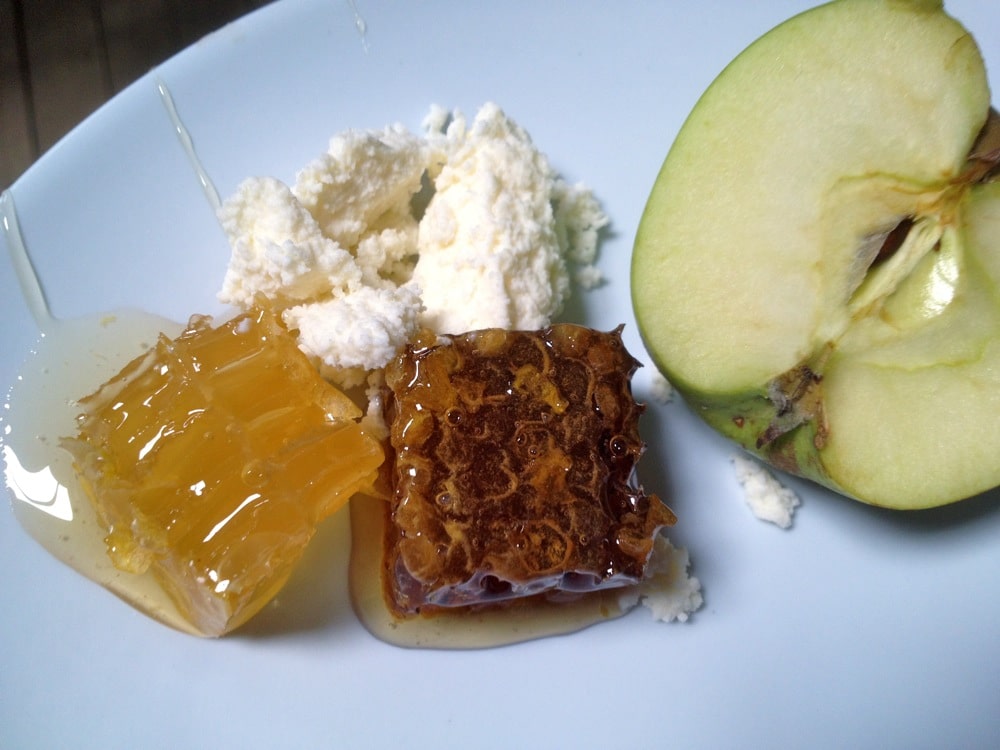
Once you start natural beekeeping you’ll soon be introduced to eating brood honeycomb – comb that has had baby bees (brood) go through it, and now contains honey.
In many traditional cultures, this dark honeycomb is the most sought after – it is riddled with extra enzymes and traces of pollen from the brood rearing process, and tastes altogether different from virgin honeycomb – nutty, strong and complex…
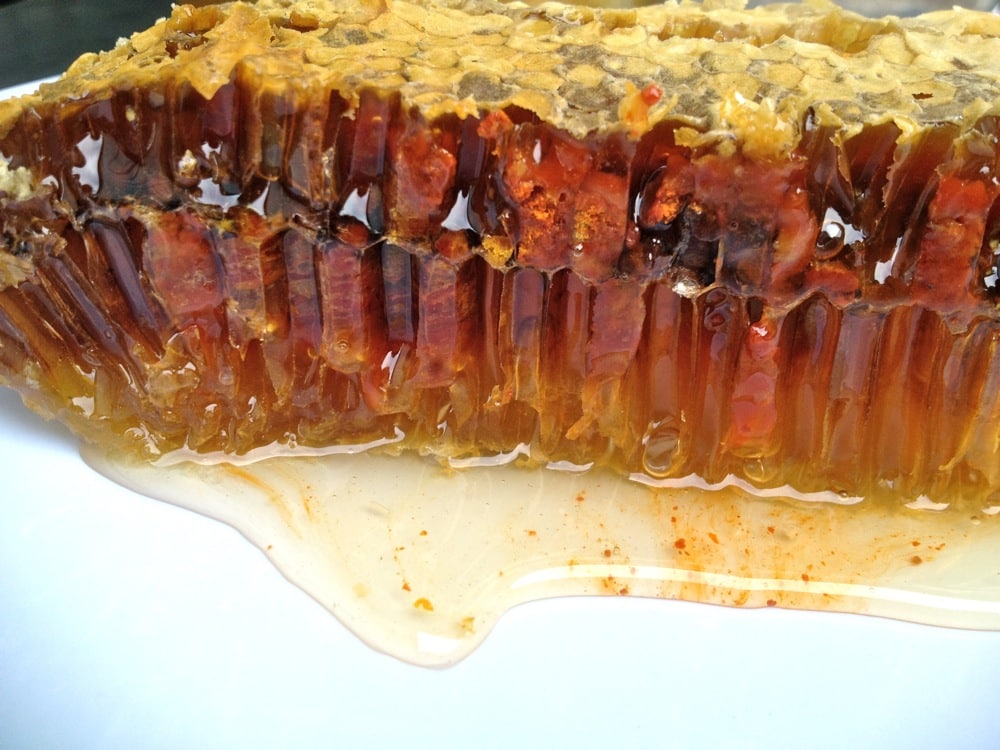
Post-brood honeycomb, dark, nutty and laden with pollen
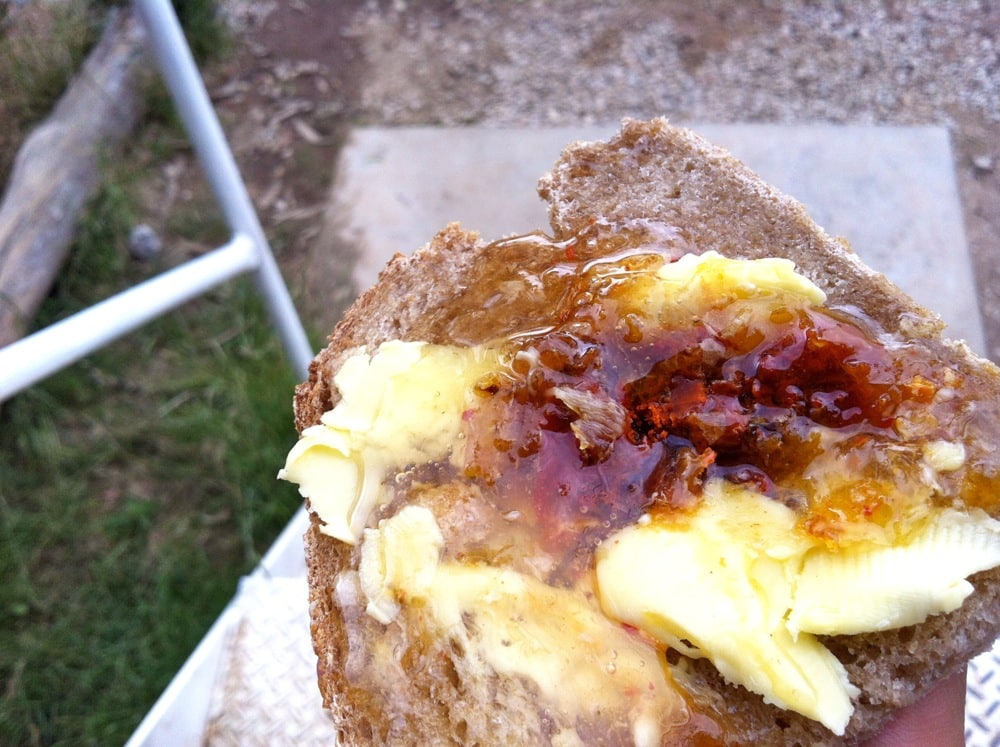
Dark honeycomb, stacked with pollen, on sourdough toast
We’re learning all about the different types of honeycomb currently, mostly through eating it, and I have to say that the post-brood honeycomb is a taste sensation! Such a treat on sourdough toast.
Interestingly, the post-brood honeycomb is not considered valuable as comb in most conventional western beekeeping, when compared to virgin honeycomb. But to us, it’s just a different taste, and part of the complexity and diversity of the yield coming from our Warré hives.
While I love the melt-in-your-mouth aspect of virgin wild honeycomb (ie with no pre-made foundation between the cells), I’m grateful we’ve got this dark and complex honeycomb to store away for winter to guard against family winter coughs and sneezes…
The warré honey that we pressed recently is likewise stored away, to be taken medicinally, and on toast. (Don’t you feel sometimes that breakfast is medicinal in itself? It is in our house!) This honey is chock-full of pollen and all the goodness of wild comb, so wont be used in cooking or tea, so as to retain all its goodness.
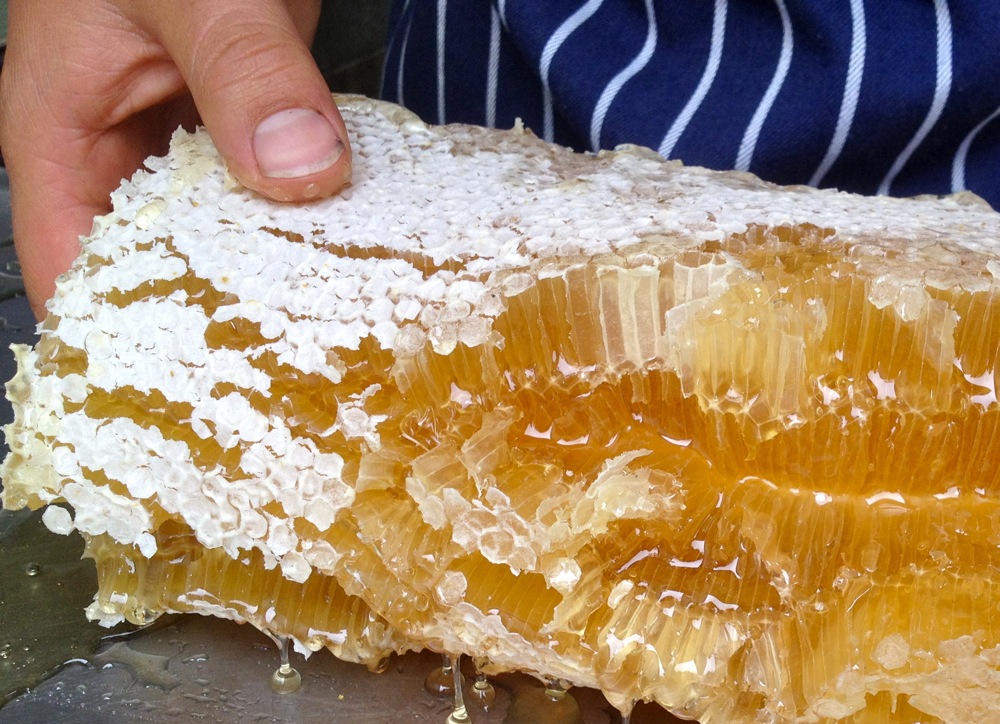
Virgin honeycomb!
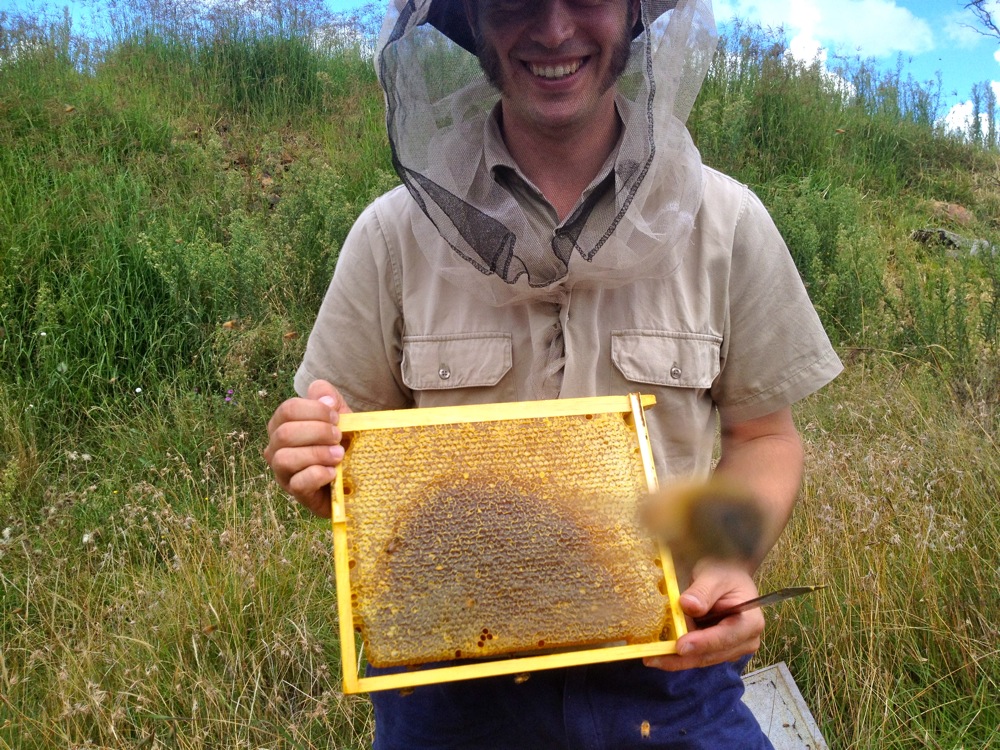
Tim with a warré frame of honeycomb showing a crown of virgin honeycomb (light yellow) with post-brood honeycomb beneath (darker area)

The same comb, all cut up and ready to munch...
Virgin honeycomb and post-brood honeycomb side by side - both delicious in different ways, both part of the bounty of the hive!
You can read more about our Warré beekeeping adventures here. And if you’re within coo-ee of Sydney or Mudgee you can even do a natural beekeeping course and learn all about it…