
Finally it’s time to start a milkwood kombucha brew, following the donation of a mother mushroom from a friend.
We started simple, but we have vast dreams of many flavoured brews, which will adorn our every shelf and fill our tummies with fizzy fermented goodness. But first, the basics…
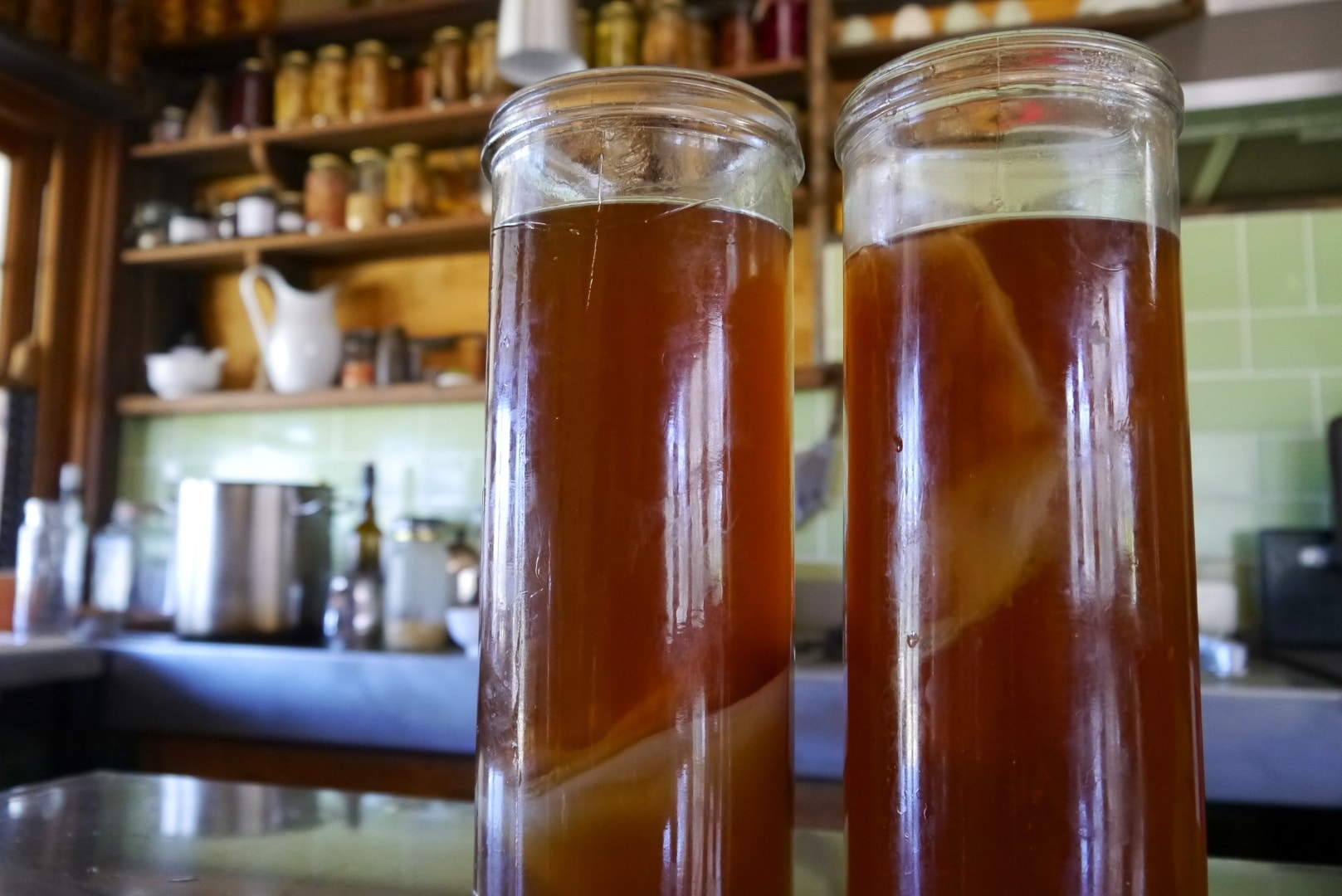
Since the strawberry experiment I have been trying very hard to keep in mind that recipes can be a Good Thing, at least sometimes.
Starting a ferment topped with a symbiotic community of bacteria and yeast (ie a SCOBY) that will be left sit for 7 days seems like a good time to stick to the recipe, to me.
However, after consulting The Art of Fermentation by Sandor Katz, it seems that it’s more a rule of thumb situation than a hard and fast recipe…
“Kombucha is usually just sugar-sweetened tea, fermented by a specific community of bacteria and yeasts.
By tea, I mean an infusion made from the tea plant (Camellia sinensis), not the infusions of other plants (such as chamomile or mint) that in the English language we also describe as teas.
You may use black tea, green tea, white tea, kukicha, pu-er, or other styles of tea, but in general stay away from Earl Grey or other heavily flavored or scented teas, as the added essential oils may inhibit fermentation.
You may use tea bags or loose tea, and brew the tea strong or weak, as you like. I typically brew a very strong concentrate, then dilute and cool it by adding water, so I can add the SCOBY without having to wait for the tea to cool.” – Sandor Katz, The Art of Fermentation
Or, if you really need a recipe, Sally Fallon’s Nourishing Traditions is an excellent and stalwart guide. And she recommends that you make kombucha thus:
- 3 quarts filtered water
- 1 cup organic white sugar
- 4 teaspoons of black tea
- 1/2 cup kombucha from a previous culture
- 1 kombucha mushroom (scoby) or starter culture
After boiling up the water, tea and sugar, you let the mix cool then sieve into jar/s, adding a scoby and a half cup of kombucha tea (from a previous round) to each jar.
Adding some kombucha tea from a previous culture is important, as it both contributes essential organisms and also acidifies your new brew, creating a selective environment that will benefit the kombucha ferment.
It’s also an aerobic process, so keeping dust out while letting air in is important. Once all that’s sorted, it’s a matter of letting things be.
7-10 days later, your kombucha tea should be in business. That all seems reasonably simple. Let’s go.
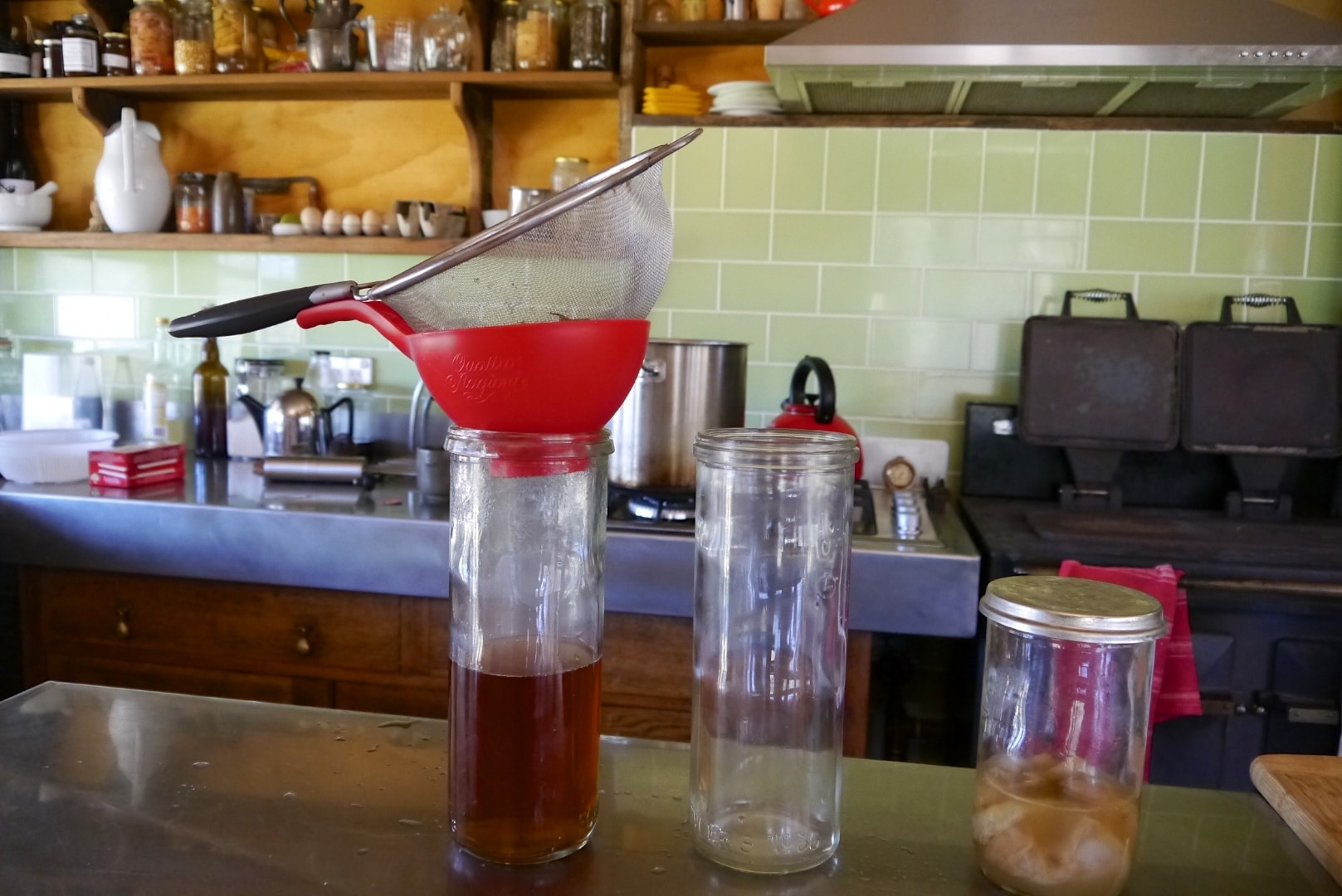
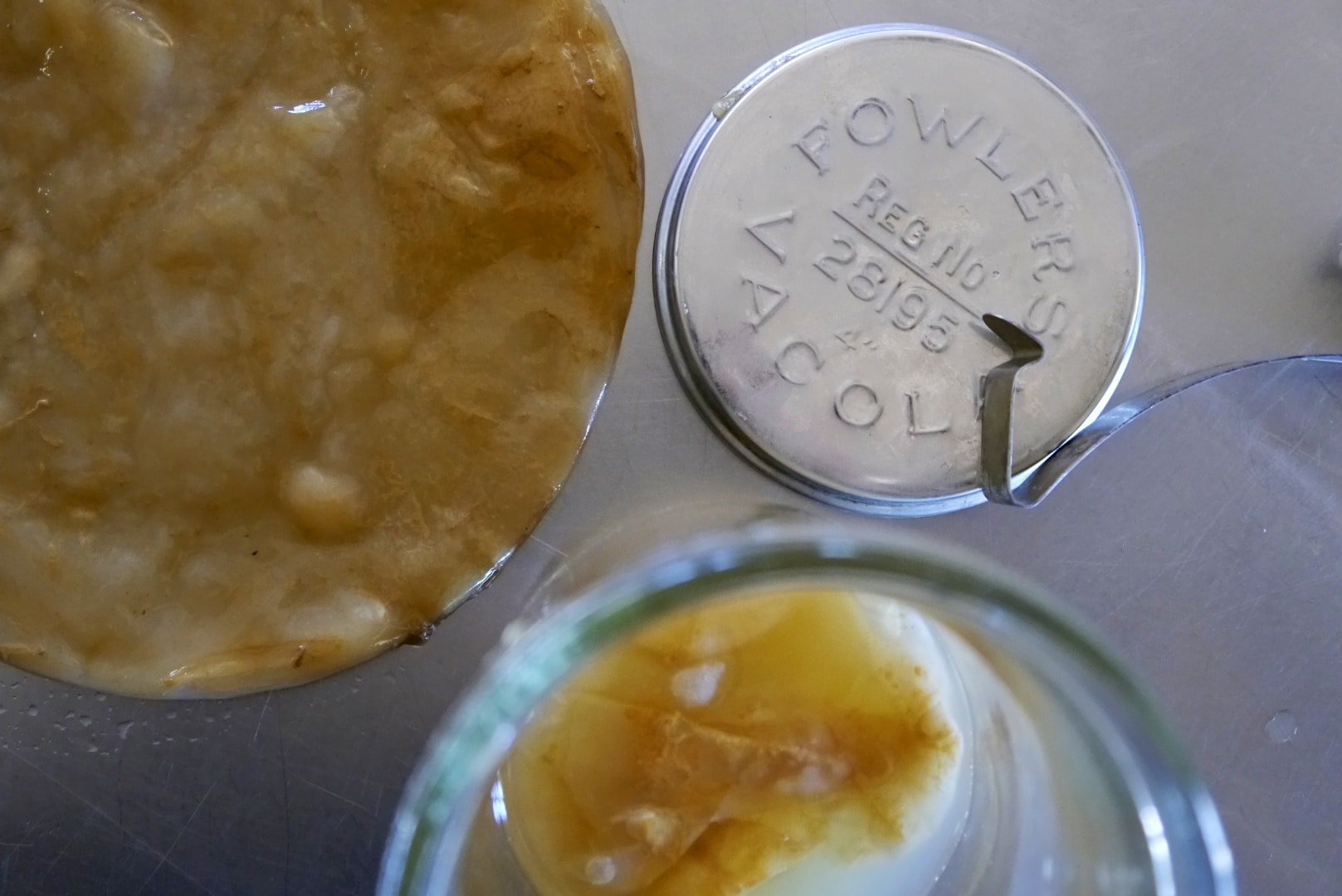
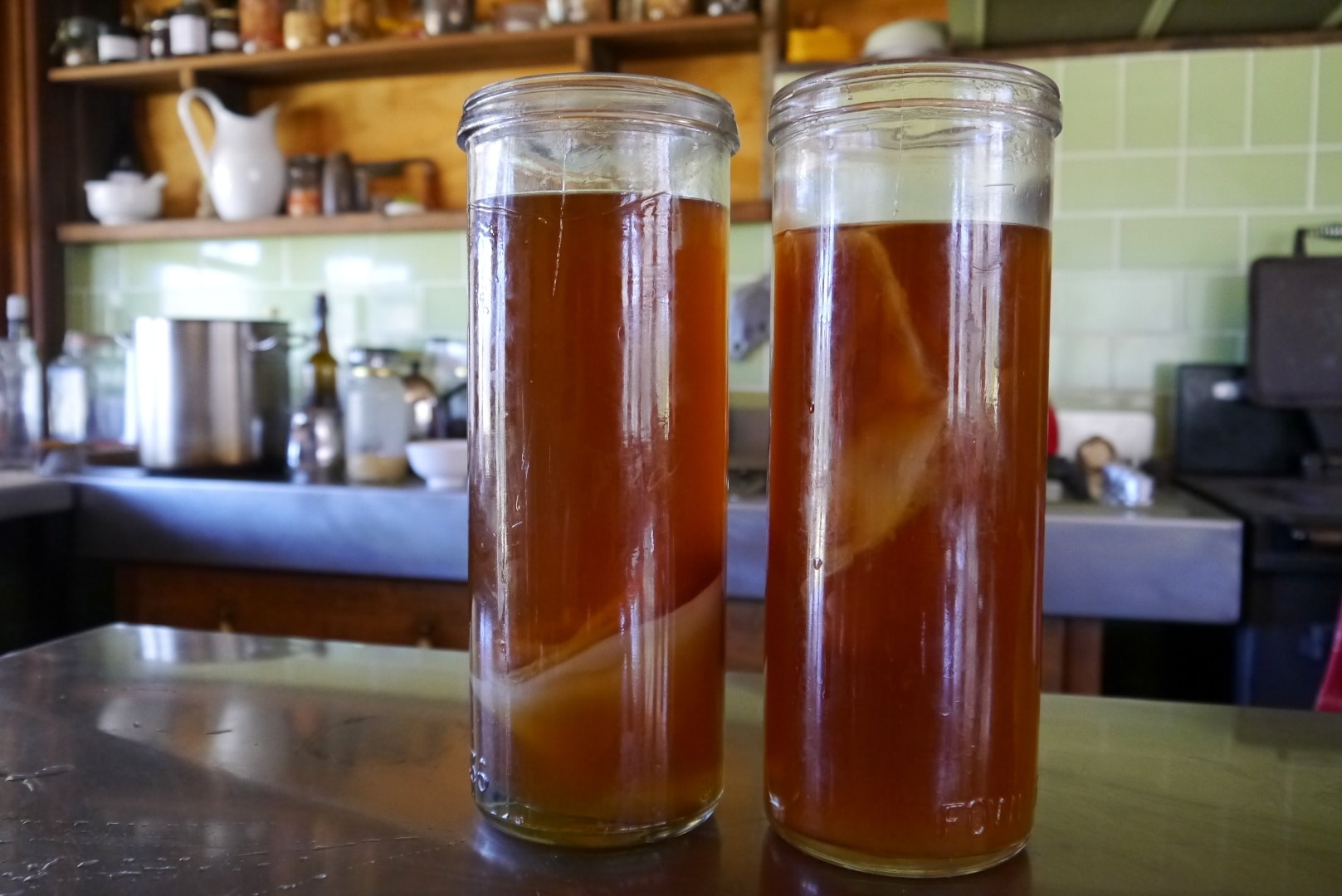
As usual, the only empty jars we had about the house were Vacola preserving jars, which get used for just about everything at our place.
It turns out that my favourites ,the size 36 Vacola jars, hold 1200ml.
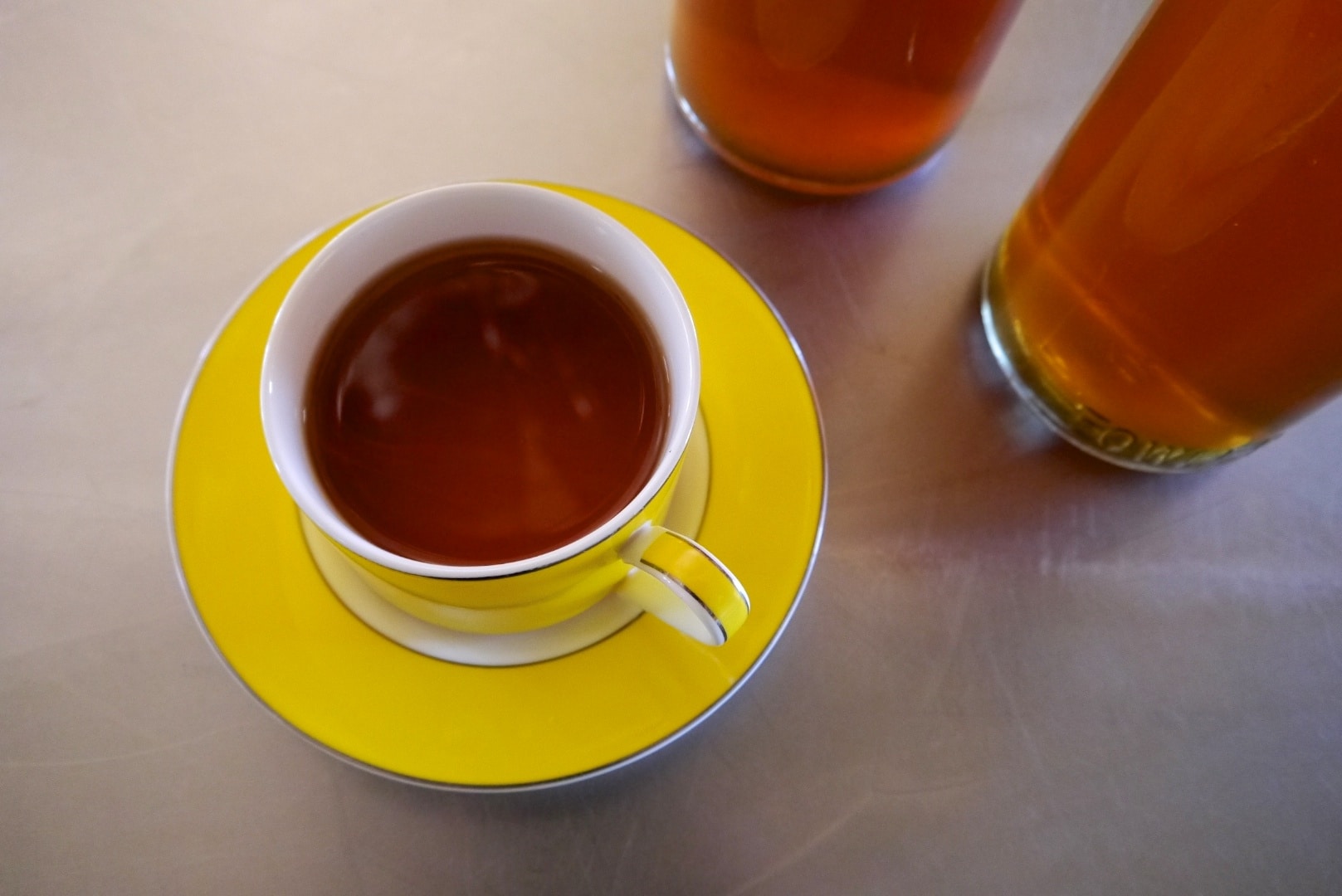
So with a 3 quart batch, we ended up with 2 jars of tea, with 1/3 a jar left over for drinking while we waited for the tea to cool, and while we discussed the joys and effectiveness of doing quart-to-litre conversions in our heads.
I snuck in a good pinch of green tea to the brew as well, just because. The leftover mix tasted darn fine, so here’s hoping the final product is a first-run winner.
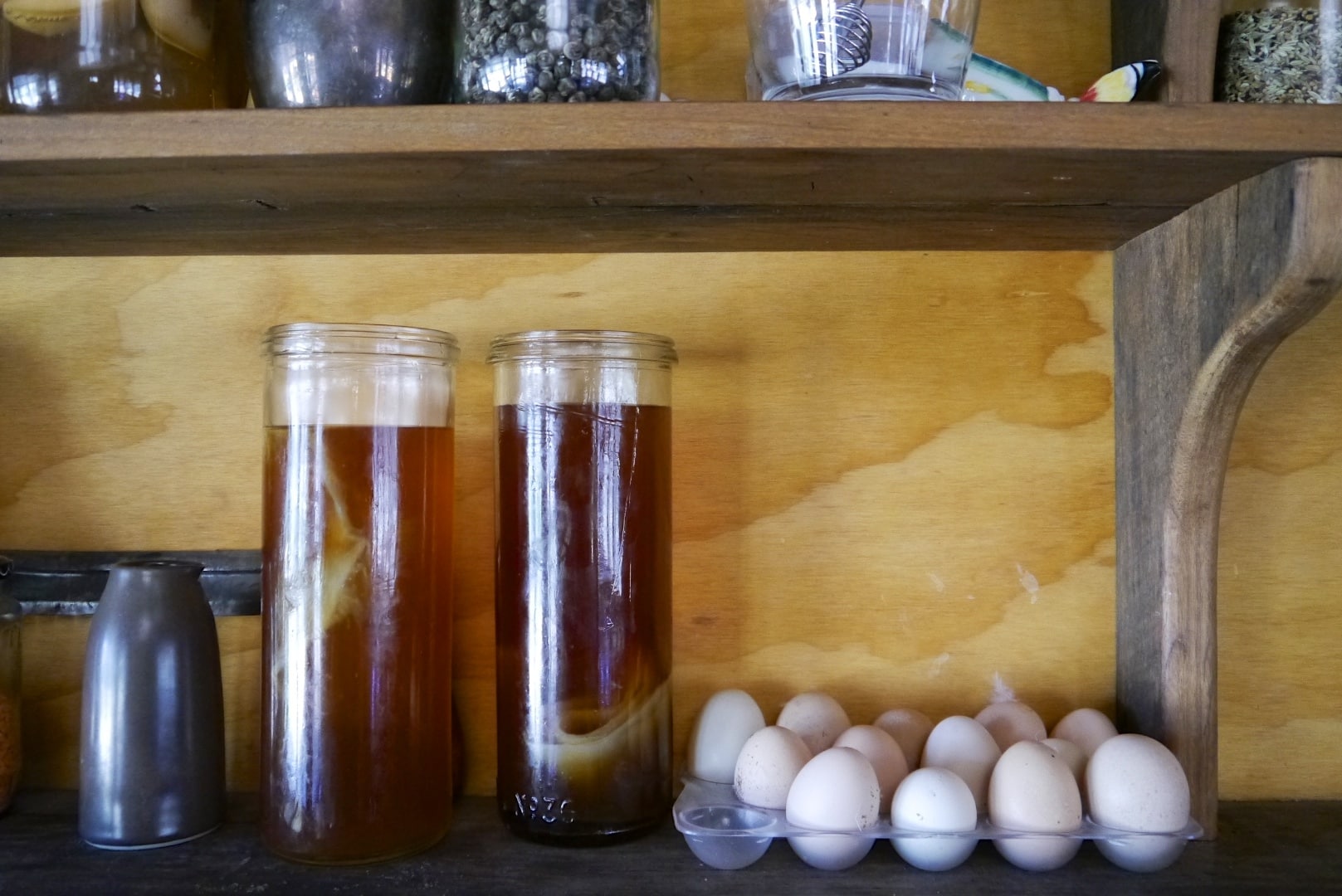
Once the jars of tea were cool, we added a scoby to each, along with the half cup of kombucha brew.
And then it was time to stick them on the shelf, and leave them alone to do their thing.
As a nerdy child, I do recall trying to chronicle a range of things (usually sea life) that I’d found along the beach in jars of sea water on my bedroom shelves.
I also recall my mum not being very into this cataloging system.
Anyway, finally I’ve got funky things floating in jars. In my kitchen, even. Except these things are very much alive, and brewing up goodness for my family. This is great.
I’ll report back in 10 days and let you know how we went with this new brew.
Because then it will be time for the secondary ferment, which is the bit that makes for a fizzy kombucha tea, and that you can add the funky flavours to.
I’m thinking strawberry and fresh tumeric (separately) will be our first two… and then on to the moon! In a flavour way, you know.
Here’s an extract of the kombucha section of Sandor Katz’s very excellent book The Art of Fermentation.
Or listen to an interview with Sandor on kombucha making here.
Are you brewing kombucha? How is it going? What’s your favourite flavour?